Quick answer
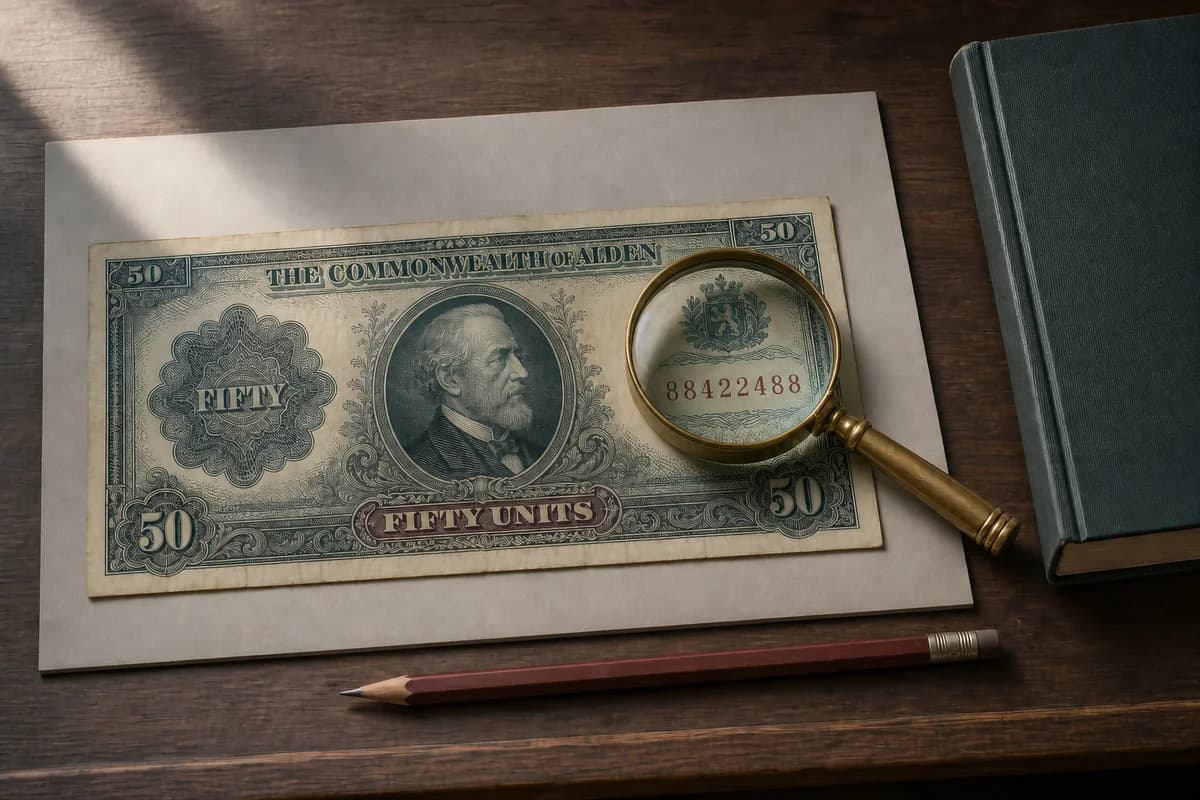
Fancy banknote serial numbers form clear, recognized patterns such as solids, ladders, radars, repeaters, true binaries, or very low numbers. A pattern can attract collectors, but it does not establish a price by itself. Check the issuer’s numbering format, the exact note, condition, scarcity, demand, and comparable sales before claiming a premium.
Recognize the pattern before estimating value
A fancy serial number is a deliberate-looking numeric pattern that collectors recognize, not merely a number that seems unusual. Strong categories include every digit matching, a complete ascending or descending sequence, a palindrome, a repeated block, a true zero-and-one binary, or a number close to the beginning of an issue’s normal range.
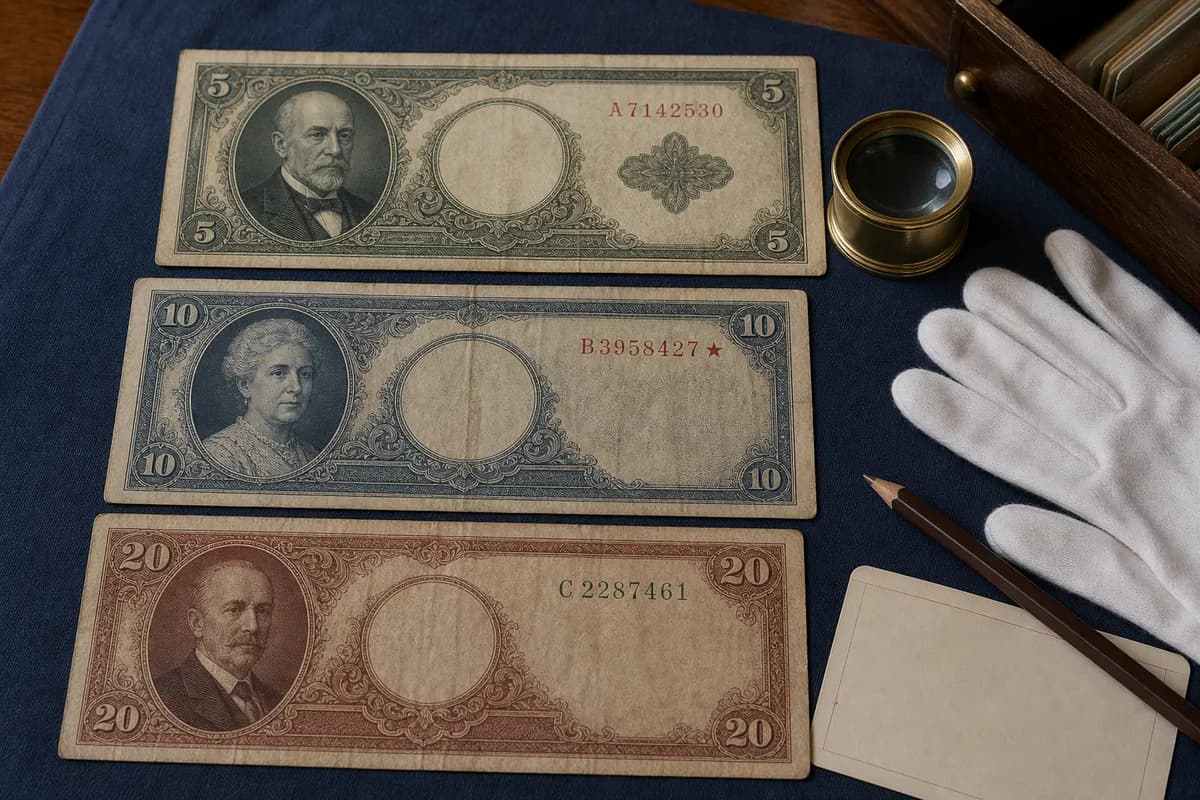
Start by transcribing every prefix, digit, suffix, star, space, and separator exactly. Then use the free fancy serial number checker to name visible patterns. A result is a classification aid, not authentication, grading, appraisal, or a guaranteed sale price.
Use precise names for the strongest serial patterns
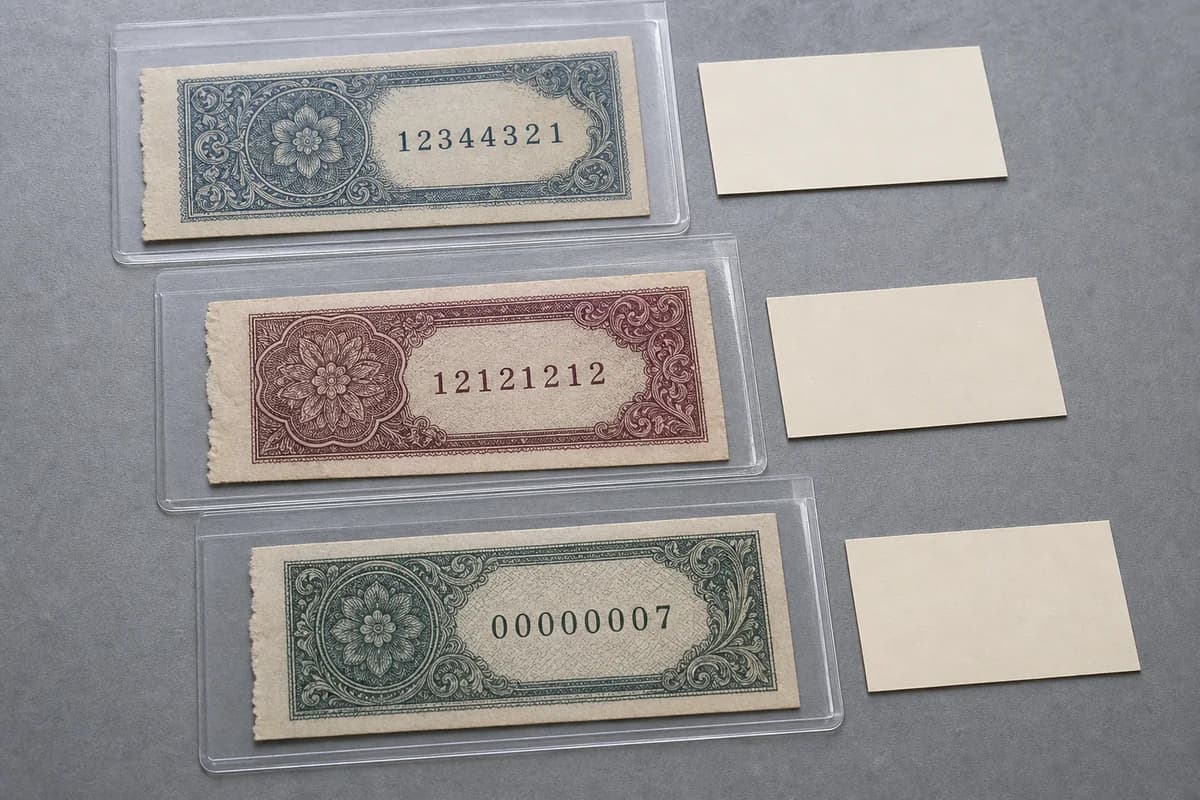
Definitions matter because vague labels inflate ordinary numbers. Paper Money Guaranty recognizes specific categories including ascending and descending ladders, true binaries made only from 1s and 0s, radars, repeaters, serial numbers 1 through 10, solids, rotators, and combinations. Collector communities sometimes use broader terms, but a marketplace label should describe what the digits actually do.
The examples below use eight digits because that is familiar on modern U.S. notes. Do not apply the same thresholds automatically to a six-digit, ten-digit, alphanumeric, checksum-based, or non-sequential system.
| Pattern | Example | Practical test |
|---|---|---|
| Solid | 77777777 | Every numeric position uses the same digit |
| Ladder | 12345678 | Every digit rises or falls by one across the full serial |
| Radar | 12344321 | The complete digit string reads the same in reverse |
| Repeater | 24682468 | The second half repeats the first half exactly |
| True binary | 01011010 | The serial contains only the digits 0 and 1 |
| Very low | 00000007 | The numeric value is near the start of that issuer’s real range |
| Combination | 12211221 | The number satisfies two defined patterns at once |
Separate strong patterns from numbers that are merely interesting
Near-solids, trinaries, bookends, partial ladders, runs of five or six matching digits, consecutive groups, and date-shaped numbers can be enjoyable to collect. They are also much easier to find than full solids, complete ladders, or single-digit low numbers. Describe them accurately instead of upgrading the label to rare.
A birthday serial depends on a reader recognizing the date. The digits 07041776 may be meaningful in a U.S. month-day-year reading, while another country expects day-month-year. Personal dates often have one ideal buyer rather than a broad market. Consecutive notes can also be attractive as an intact set without making each ordinary serial fancy.
Automated checker percentages create another trap. A number can be statistically tidy without matching a category that collectors seek. The recurring question in collector forums is not whether a score looks high, but whether knowledgeable buyers use the same name and pay for the same pattern.
Understand rarity without turning probability into price
A clean mathematical count can show why one pattern is harder to encounter than another. The Society of Paper Money Collectors calculated that a theoretical run from 00000001 to 99999999 contains nine solids, six strict ladders, 9,990 non-solid radars, and 9,990 non-solid repeaters. That model is useful for comparing patterns under the same assumptions.
Actual production is messier. A block may not start at one, reach the theoretical maximum, enter circulation in full, or survive evenly. Some numbers can be withheld, removed, used on uncut sheets, or assigned under another production rule. Probability describes possible arrangements; it does not prove how many collectible examples exist today.
Use the evidence framework in what makes a banknote rare to separate printed quantity, surviving population, condition rarity, market appearances, and demand. A mathematically uncommon serial on an unpopular issue can be harder to sell than a less scarce pattern in an active specialty.
Evaluate the whole banknote, not only the digits
First identify the country or authority, currency, denomination, issue, series, signatures, prefix and suffix, date, catalog variety, and replacement status. A fancy serial can add interest to a common note, but an already scarce type may derive most of its value from the note itself.
Next assess condition. Folds, stains, tears, pinholes, writing, trimming, washing, pressing, repairs, and missing paper affect buyer confidence and comparability. Use the banknote grading guide to describe visible condition conservatively. Do not flatten, erase, wash, or press a note to improve its appearance.
Denomination matters because keeping a circulating high-value note ties up more money. Local taste matters too. U.S. fancy-number terminology has a mature specialist following, while collectors of another country may focus more on prefix, issue, signature, replacement code, or historic context. Confirm the market instead of exporting U.S. assumptions.
Build a comparable-sales check that isolates the serial premium
Search completed auction records and sold marketplace listings for the same pattern type, denomination, series, and similar condition. Record the full serial, grade or raw condition, sale date, venue, buyer’s premium, certification status, and whether the result actually sold. An active asking price is not evidence of a transaction.
Use several comparables and separate the note’s ordinary value from the possible serial premium. If an equivalent common-serial note sells in the same venue, it provides a useful baseline. Do not compare a circulated modern repeater with a certified vintage solid, a star combination, or serial number one.
The old banknote value guide gives a reusable comparable-sales worksheet. If records are sparse, state that the market is thin and use a broad, cautious conclusion. One exceptional auction does not create a standing price list.
Treat replacement notes, errors, and matching sets as separate evidence
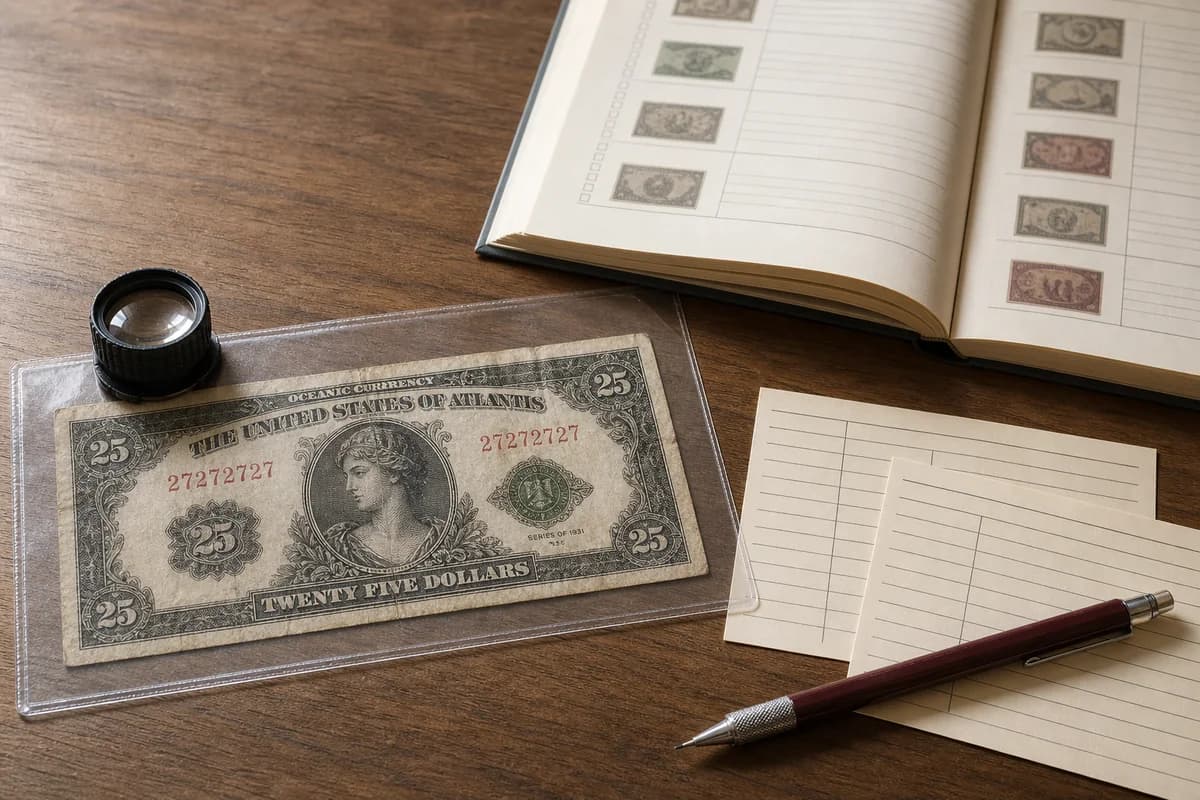
A replacement marker explains a production role. The Bureau of Engraving and Printing says a U.S. star sheet replaces a sheet found imperfect after serial numbering, avoiding the cost of recreating every original number. A star can combine with a fancy pattern, but replacement status alone does not prove a small run or strong premium.
A mismatched pair of serials, missing digit, displaced numbering, or overprint can be a production error, an altered note, or an ordinary feature of another issue. Do not classify it from a photograph alone. Compare the normal issue and seek specialist review before using error language.
Matching numbers across denominations, coordinated sets, and consecutive groups have their own markets. Preserve the set together until you understand the relationship. Splitting it can remove the feature that interested a buyer.
Photograph and store the serial without changing the note
Photograph the complete front and back first, then make a sharp close-up of every serial and prefix. Keep color natural and retain the original file. Money AI can organize visible issuer, series, date, and serial clues with the scan history, but its result remains assistive and should be checked against issuer records and specialist references.
Record where and when the note was found, its dimensions, condition, and any related notes from the same group. Do not post an altered or partially hidden serial when asking someone to evaluate the pattern, since one digit can change the classification.
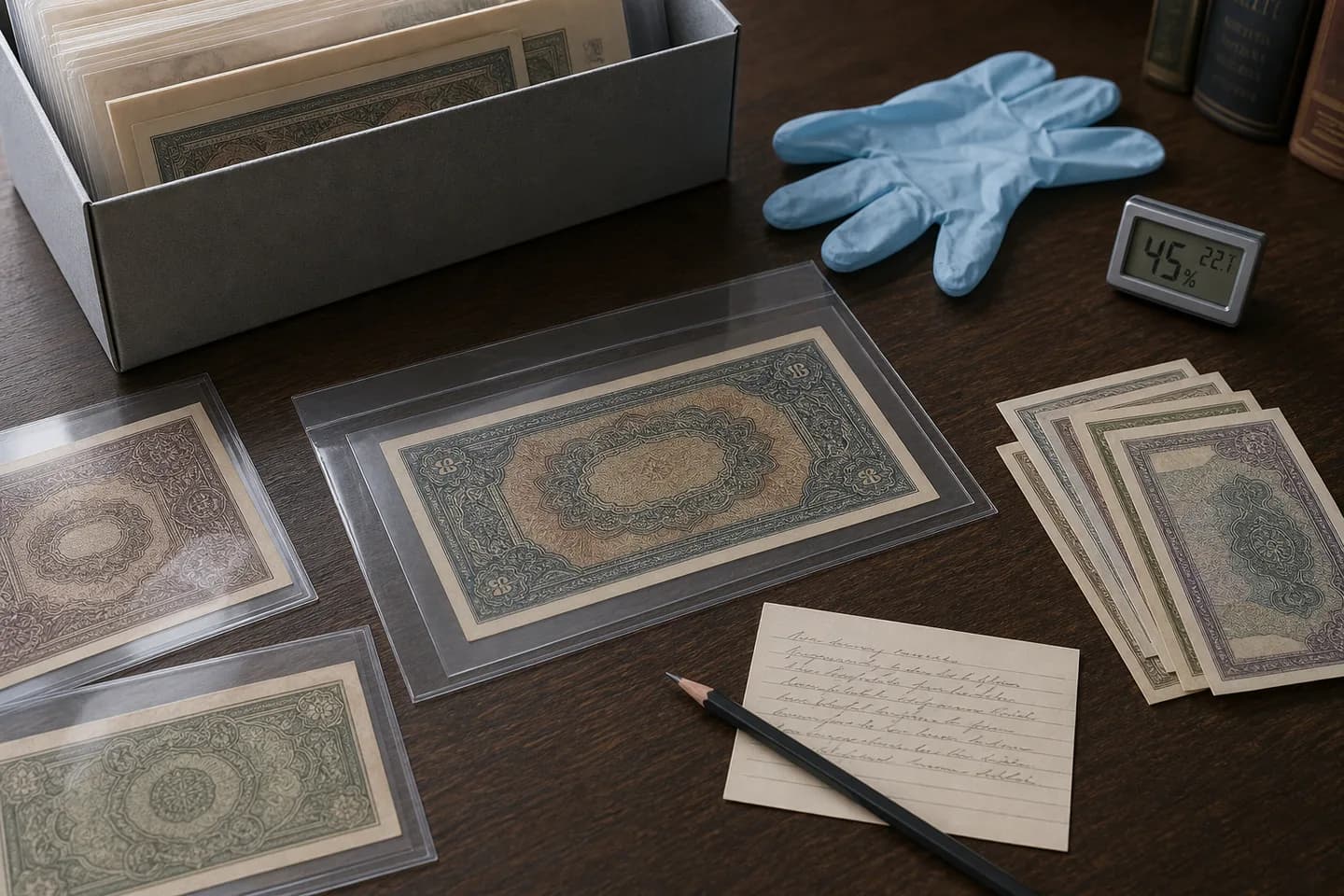
Place a keeper in a correctly sized inert enclosure and avoid PVC of uncertain composition, tape, clips, rubber bands, sunlight, and repeated handling. Follow the safe paper money storage guide rather than laminating or sealing the note permanently.
Use a disciplined keep, spend, sell, or grade decision
- Keep it if the pattern is accurately named, you enjoy it, and holding the denomination does not strain your budget.
- Spend or exchange it if the pattern is weak, the note is common, and no reliable market evidence supports a premium.
- Research a sale if multiple completed records show demand for the same pattern and comparable condition.
- Seek specialist advice if the numbering system, authenticity, production error, or exact variety remains uncertain.
- Consider grading only after likely benefit exceeds fees, shipping, insurance, delay, and the risk of an uneconomic result.
- Document uncertainty. A careful description earns more trust than a dramatic claim based on a checker score.
Frequently asked questions
What counts as a fancy banknote serial number?
Collectors usually reserve the term for a defined pattern such as a solid, full ladder, radar, repeater, true binary, or genuinely low number. Broader labels such as near-solid, trinary, birthday, or bookend may attract niche interest, but standards and demand vary.
Are repeated digits always valuable?
No. Several repeated digits can look appealing without forming a recognized pattern, and even a strong pattern still needs buyer demand. The note’s identity, denomination, condition, local collecting market, and recent comparable sales all affect whether a premium exists.
Does a high serial-number checker score prove rarity?
No. A percentage or coolness score may describe mathematical features, but it is not a population census, grading opinion, appraisal, or record of what buyers paid. Use a checker to name a pattern, then verify the note and research the market.
Is a birthday serial number a fancy serial?
A valid date can have personal appeal, especially when the date is widely meaningful, but the market is narrower than for a solid, ladder, or very low number. Date order also varies by country, so document the intended format rather than assuming every eight-digit date is equally collectible.
Is every star note a fancy serial number?
No. On U.S. Federal Reserve notes, the star identifies a replacement used in production. Replacement status is different from a numeric pattern, and not every star note is scarce. Research the exact series, denomination, block, run, and condition.
Should a fancy serial note be professionally graded?
Consider grading only when the likely market premium, the note’s condition, authenticity questions, and buyer preferences justify the total fee, shipping, insurance, and risk. A recognizable pattern alone does not make grading economical.
Sources and further reading
Explore the primary references used to prepare this collector guide.
- U.S. Currency Education Program: Banknote Identifiers and Symbols
- Bureau of Engraving and Printing: Serial Numbers
- Paper Money Guaranty: Fancy Serial Numbers on Currency
- Society of Paper Money Collectors: How Rare are Fancy Serial Numbers?
- Bank of England: How much is a banknote worth?
- PCGS: What Are Radar Notes?