Quick answer
Do not clean, rearrange, split, or sell an inherited banknote collection immediately. Keep albums, envelopes, labels, receipts, certificates, and reference books together. Photograph the collection in its current order, make a batch-level inventory, secure it in stable storage, then identify and research the notes most likely to affect the next decision.
Pause before changing the collection
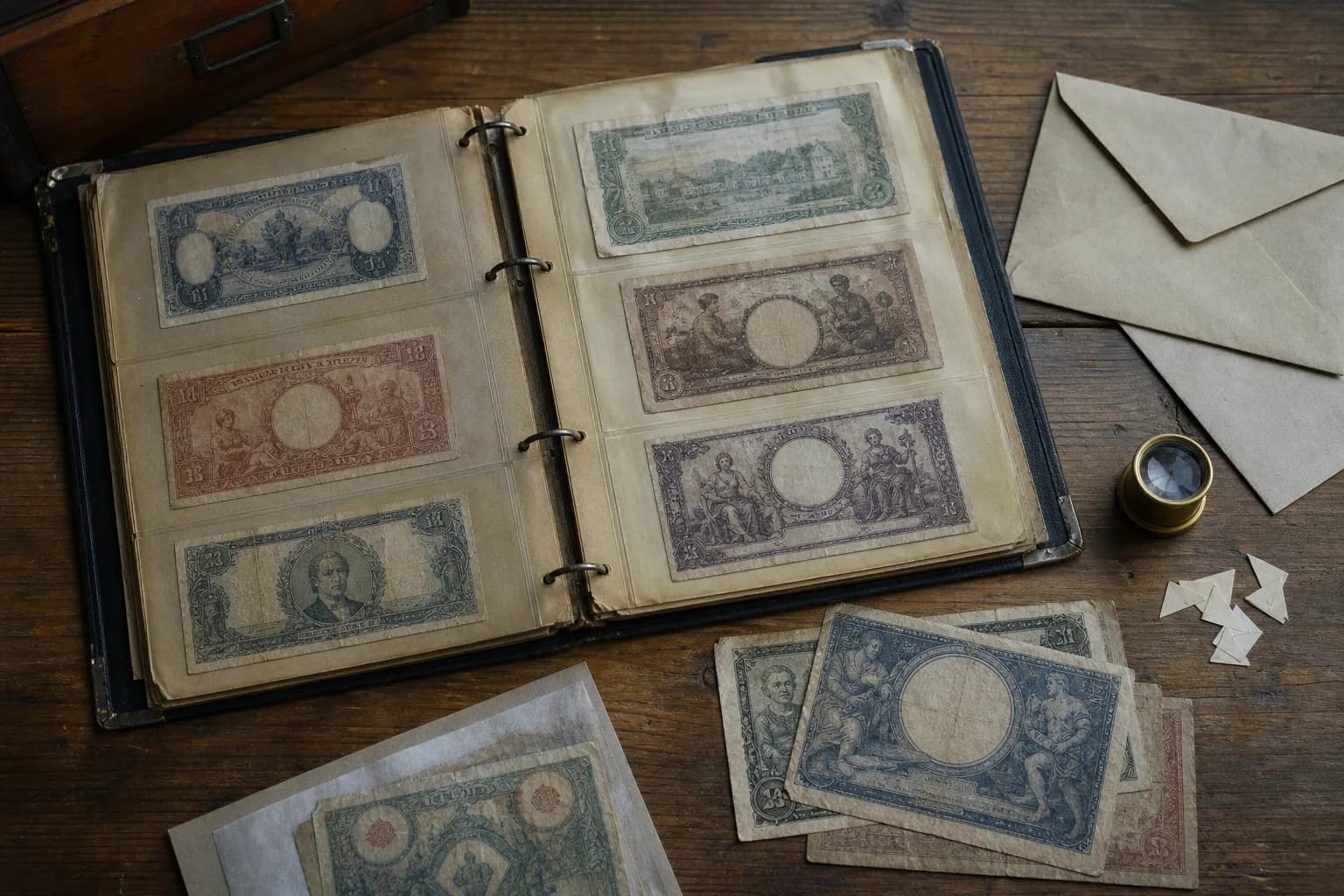
The safest first decision is to make no irreversible decision. Do not clean the notes, flatten folds, replace every holder, discard envelopes, separate matched sets, or accept the first purchase offer. A collection assembled over decades may contain an order that explains country groups, issue sequences, acquisition history, or the collector's priorities. Once that order is lost, it can be difficult to reconstruct.
Move the material only as much as security requires. Choose a locked, clean, dry interior space away from direct light, plumbing, exterior walls, radiators, attics, basements, pets, and food. Record who currently controls the collection and where each box or album is placed. If an executor, insurer, lawyer, or several heirs are involved, keep a simple dated log of every transfer and decision.
This pause is not an assumption that the collection is financially important. It protects both common and exceptional material while you learn what is present. It also gives the family time to identify sentimental pieces before a sale plan begins.
Keep the collector's order and documents together
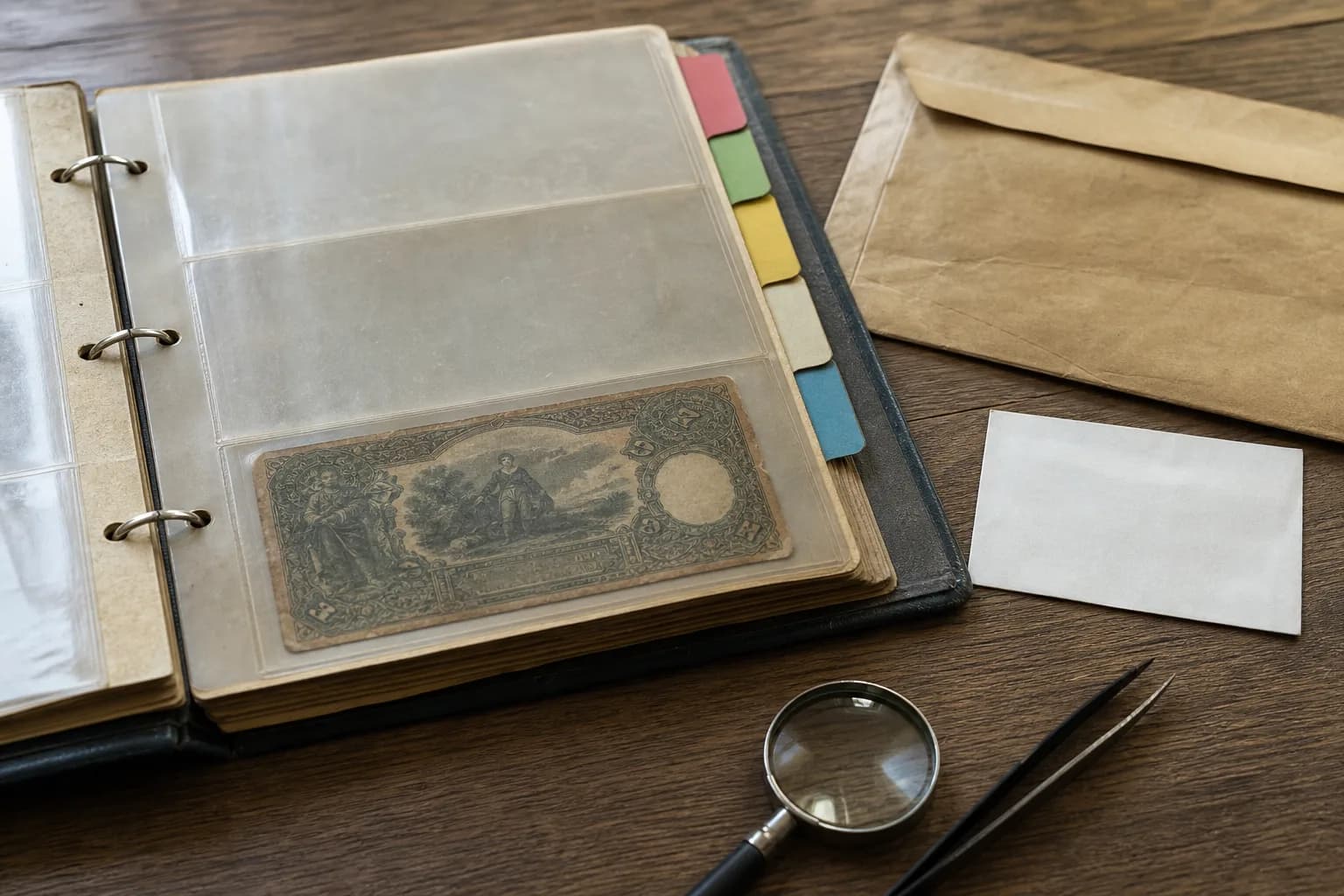
Photograph each box, drawer, album cover, page sequence, envelope, label, receipt, certificate, dealer card, auction tag, and handwritten list before moving individual notes. Give every container a neutral code such as Box A or Album 2. Avoid writing on the banknotes, holders, or original paperwork. A separate index card or digital record can connect the code with its location.
Do not assume an old envelope or small reference book is rubbish. It may connect a note with a purchase date, auction lot, catalog number, former owner, or collector-defined set. A high printed catalog value is not a current sale price, but the book and the collector's annotations can show which varieties they believed they owned.
If several people share the inheritance, preserve the collection as one documented unit until the initial review is complete. Dividing it by album count or note count can produce unequal groups because most collections contain a mixture of common material and a smaller number of specialist items.
Stabilize storage without cleaning the notes
The Library of Congress advises clean hands and a clean work area for paper collections, with food and drink kept away. It also warns against paper clips, rubber bands, self-adhesive tape, and glue. Keep banknotes flat and fully supported. Do not press them under books, iron them, erase marks, use household cleaners, or try to remove stains. The guide to cleaning old banknotes explains why even a neat-looking result can destroy evidence of original condition.
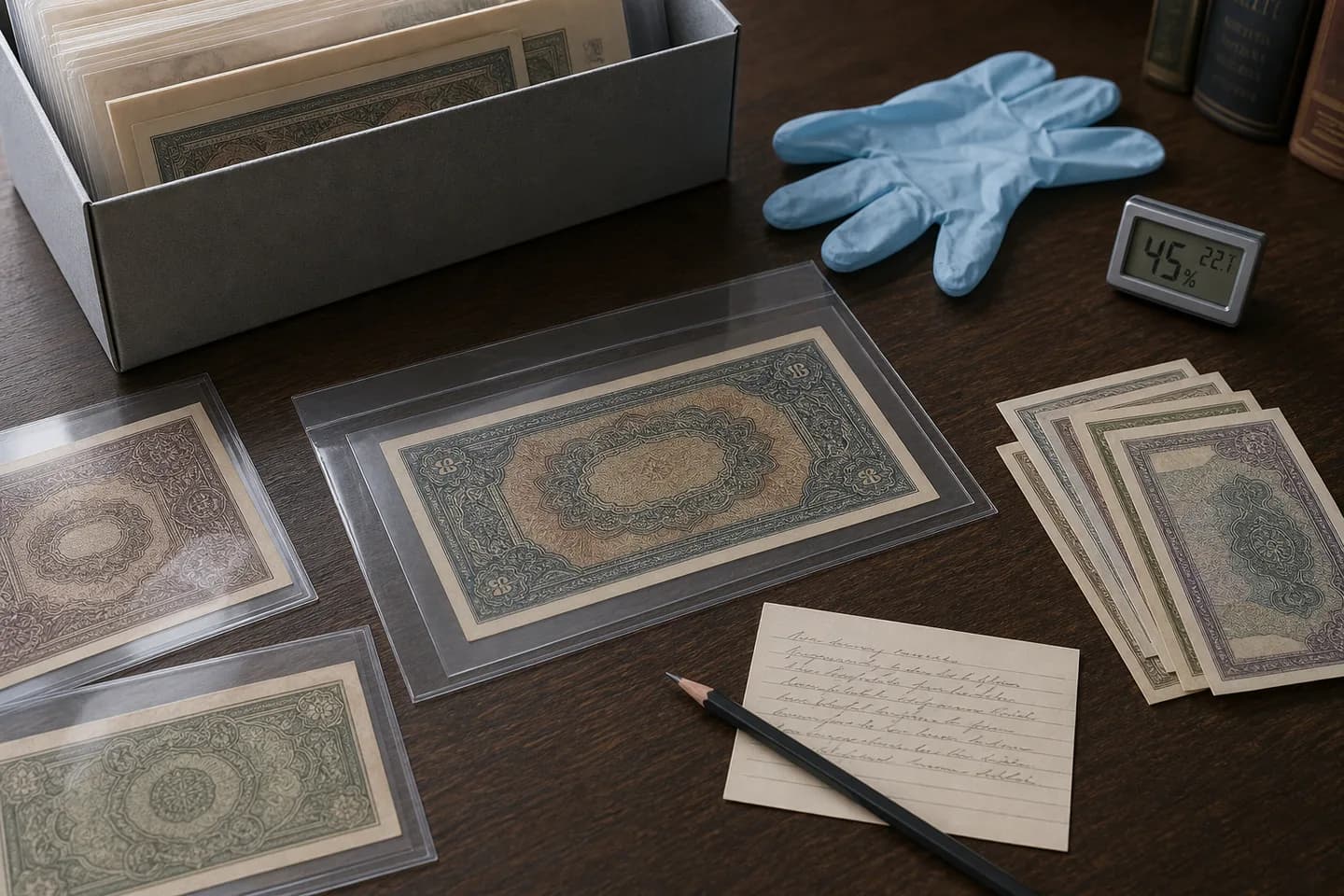
Stable storage matters more than an immediate album upgrade. Use a cool, relatively dry, clean interior space with minimal light and no rapid environmental swings. If a note is already in a sound inert sleeve, leave it there during intake. If loose notes need temporary protection, follow the paper money storage guide and use correctly sized, clearly specified inert materials.
Active mold, dampness, insect activity, soot, flaking media, stuck pages, strong chemical odor, or a recent water event changes the priority. Isolate the affected container without spreading residue through the collection. Do not seal wet material in plastic. A paper conservator, recovery specialist, or insurer should guide the next step.
Build a batch-level inventory first
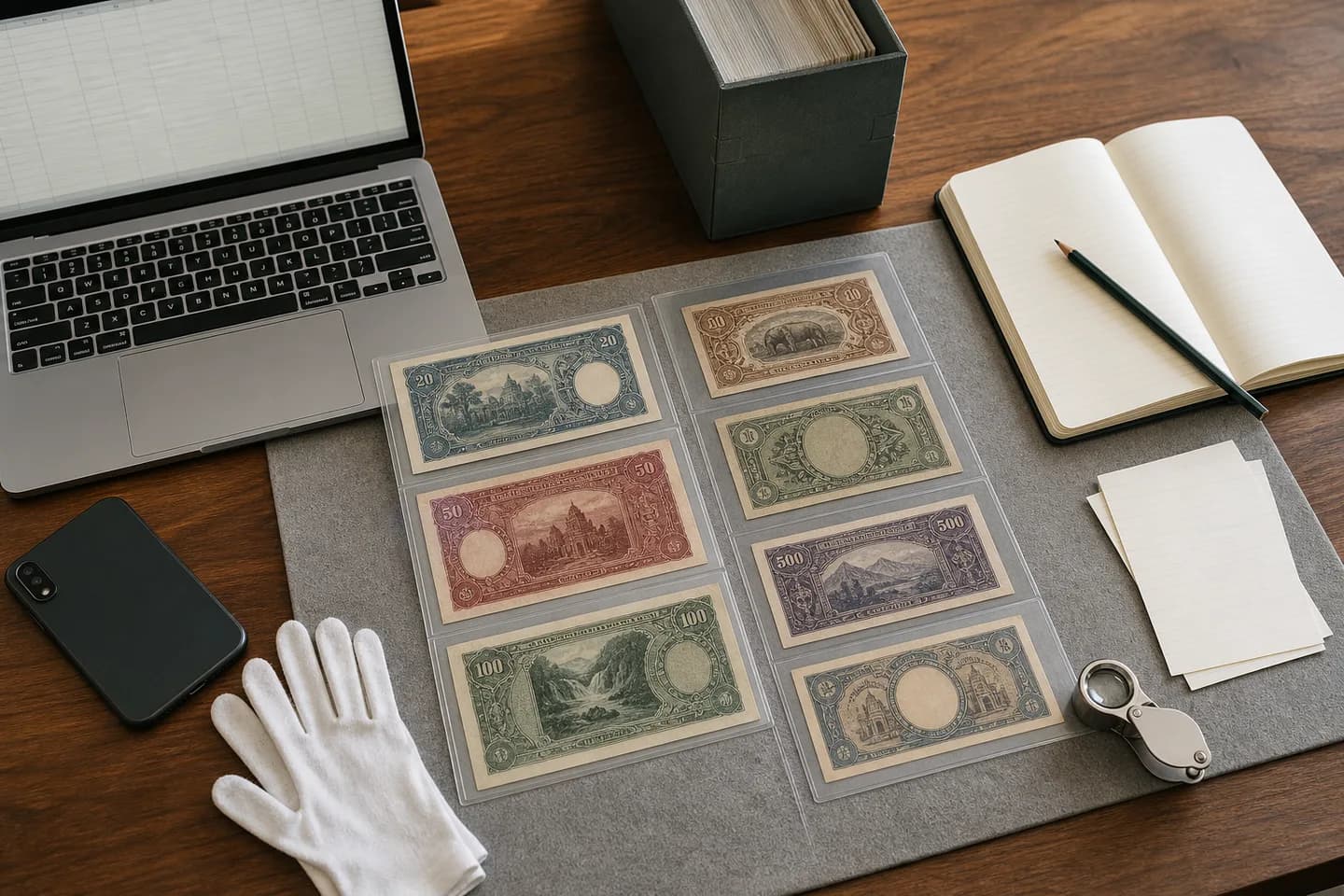
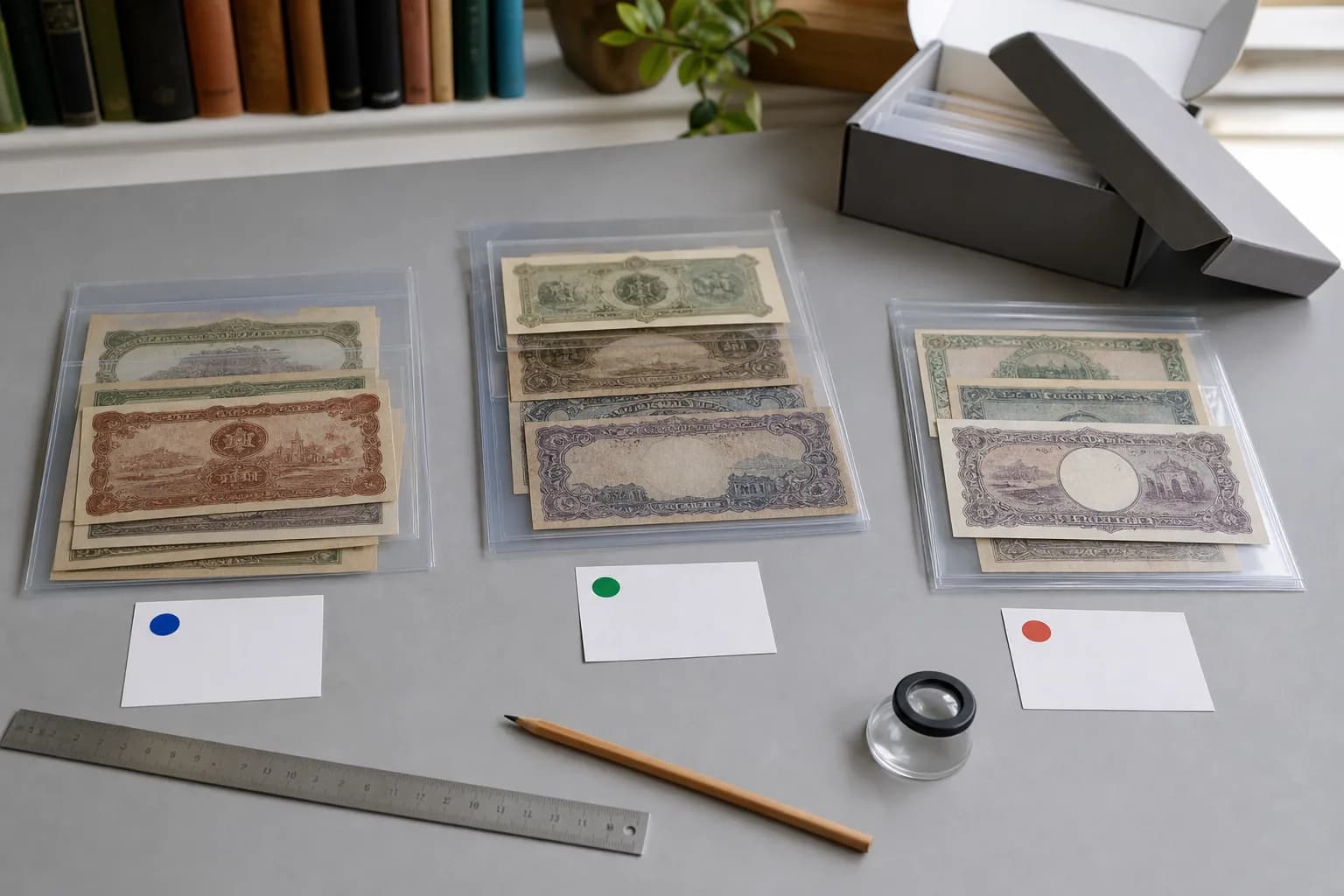
A large inherited banknote collection does not need a perfect item-by-item catalog on day one. Begin with containers and batches. Record the code, current location, broad contents, approximate quantity, apparent organization, visible documents, storage concerns, and whether anything looks graded, certified, unusually old, or intentionally grouped. This creates control without turning the first week into a scanning marathon.
Photograph a full album spread or a small group straight on, then add one closer image only when a date, issuer, signature, serial, stamp, or annotation matters. Keep the front and back sequence consistent. Use filenames that carry the container code and image order, then store a second copy of the photographs separately. The Library of Congress digitization guidance emphasizes a clean work area, careful support, and avoiding pressure that could damage fragile material.
A spreadsheet works well for transparent custom fields and shared review. A collection app may make mobile photos and repeated lookup faster. The app versus spreadsheet guide explains how to test exports, backups, and privacy before committing the estate record to one system.
Triage the notes that deserve closer research
The goal of triage is not to declare a treasure. It is to identify which parts of the collection could change the storage, insurance, appraisal, or sale plan. Give priority to professionally graded holders, certificates, auction invoices, organized specialist runs, scarce local or private issues, specimens, replacements, unusual serials, suspected errors, very large denominations, and notes with a clear provenance trail.
Treat dramatic appearance cautiously. Old age, an unfamiliar script, a portrait, a stamp, a low serial number, or a large printed denomination can be interesting without being rare. Reproductions, souvenir notes, altered pieces, fantasy issues, and common withdrawn currency also appear in inherited groups. Use the banknote rarity checklist to separate surviving scarcity, condition rarity, demand, and a special variety.
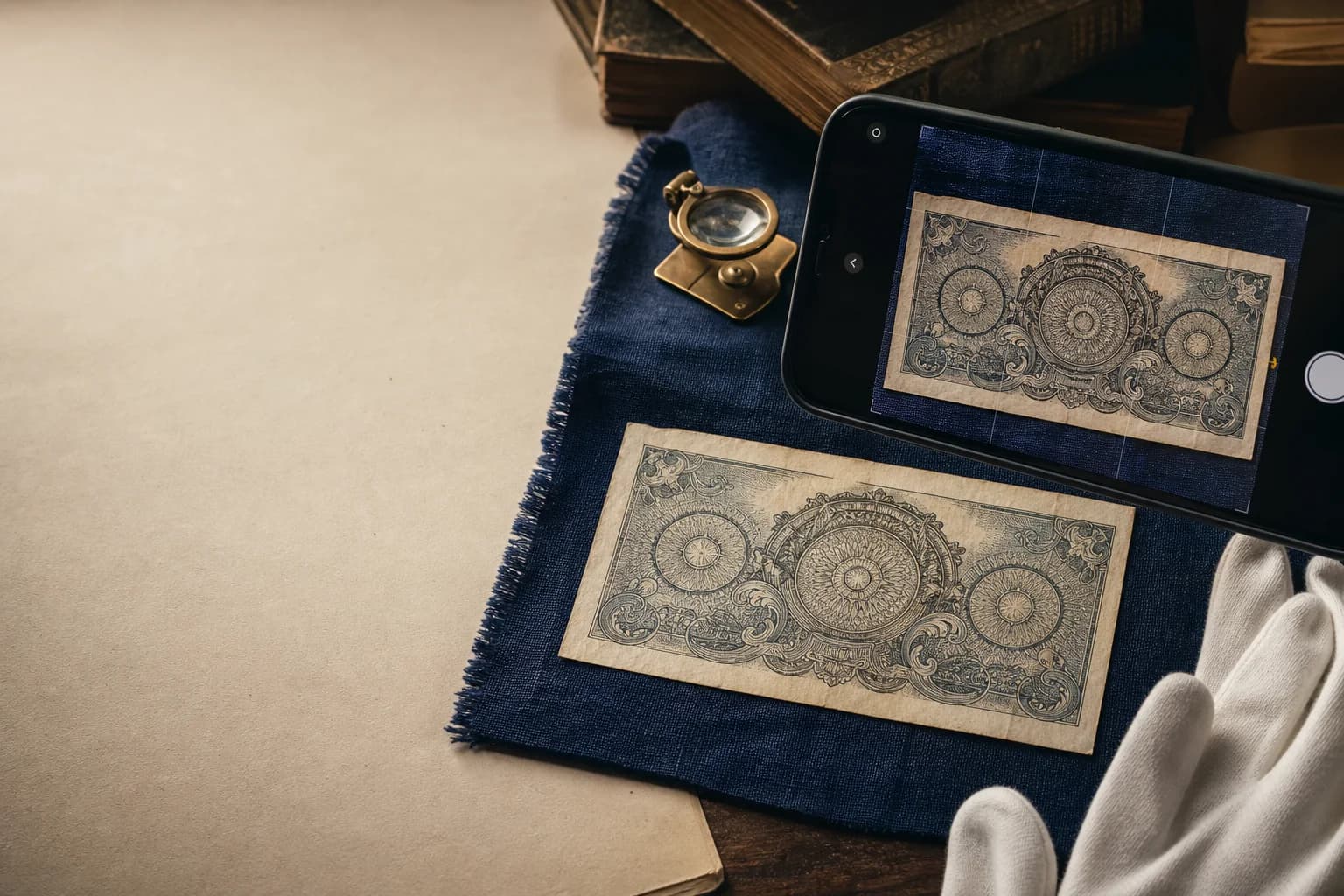
For each priority note, capture the complete front and back plus the issuer, denomination, date, signatures, serial, printer text, watermark area, and any label. The photo identification guide gives a repeatable image sequence. Keep uncertain identifications marked as tentative until a reliable catalog, issuer, or specialist confirms them.
- Escalate immediately: active damage, a high-value invoice, a certification label, or a note that may need secure transport.
- Research next: complete sets, scarce-looking varieties, unusual issue types, and notes with useful provenance.
- Batch later: loose common travel money, obvious duplicates, and low-value mixed groups after issuer status is checked.
Separate five different value figures
Value becomes confusing when one number is expected to answer five different questions. Catalog figures, dealer offers, auction estimates, insurance appraisals, and net sale proceeds are not interchangeable. Condition, exact variety, buyer demand, fees, taxes, shipping, and the time allowed for a sale can change the result.
Identify the exact note and document a conservative condition range before comparing sales. The old banknote value guide shows how to match issuer, series, variety, grade, problems, and sale date. Active asking prices show what sellers hope to receive, not what a buyer actually paid.
| Figure | What it means | Best use | Main caution |
|---|---|---|---|
| Catalog value | A reference figure for a stated variety and grade | Comparing relative importance within a series | May be dated or different from current market results |
| Dealer offer | A price a buyer is willing to pay now | Fast, simple liquidation | Includes the buyer's costs, risk, and resale margin |
| Auction estimate | A range intended to guide a future auction | Planning consignment for suitable material | Not a guarantee of hammer price or net proceeds |
| Formal appraisal | A documented opinion for a stated purpose and date | Probate, insurance, tax, donation, or division | The value definition may not equal a sale result |
| Net proceeds | Money retained after commissions, fees, shipping, and other costs | Comparing real sale paths | Cannot be inferred from a headline price alone |
Choose the right expert and compare advice
Match the adviser to the material and the decision. A local dealer may efficiently review a common accumulation. A banknote specialist may be necessary for world issues, private banks, military money, emergency currency, specimens, or unusual regional series. A major auction house may suit scarce, well-documented material with an established buyer base. A qualified independent appraiser may be required when the purpose is probate, insurance, tax, donation, or equitable division rather than sale.
Ask how the adviser is paid, which banknote areas they handle, what value definition they will provide, whether the opinion is written, and whether they also want to buy or consign the material. A sales interest does not automatically invalidate the advice, but it should be clear. Credentials, relevant memberships, recent comparable work, references, secure handling, insurance, and written terms all matter.
For a substantial collection, select a small representative sample that includes both ordinary and promising material. Compare the identification, explanation, written offer or estimate, fees, and return arrangements from more than one qualified source. Do not ship the entire inheritance to an unknown contact or accept a private message as an appraisal.
Decide what to keep, divide, donate, or sell
Make the family decision only after the inventory and priority review. Start with objects that carry personal meaning: the collector's first note, a travel group, a favorite album, a note linked to a letter, or a representative piece for each heir. Sentimental value does not have to track market value. A modest note can be the best heirloom.
For division among heirs, agree on the purpose and valuation date before allocating items. A formal appraisal may be appropriate when the stakes or legal duties justify it. Keep the inventory, photographs, and signed decision record with the estate file. Legal, tax, charitable-donation, and probate rules depend on the jurisdiction, so a qualified local adviser should answer those questions.
If selling, compare the time, control, audience, fees, privacy, packing, payment risk, and likely net proceeds of a dealer sale, specialist auction, online marketplace, collector-to-collector sale, or grouped lot. If donating, confirm that the institution wants the material and document its acceptance terms. Do not split a coherent set merely because individual items appear easier to price.
Use Money AI as an identification assistant
Money AI can help an heir photograph an unfamiliar note, suggest visible issuer, denomination, series, date, serial, material, and design clues, save a result, and ask follow-up questions. That can speed the first pass through a mixed group when labels are missing or the script is unfamiliar. Use it on representative or priority notes rather than scanning every common duplicate before the collection-level inventory exists.
The result is a research lead, not an official conclusion. Money AI does not authenticate a note, assign a professional grade, produce a formal appraisal, detect every counterfeit, or guarantee a value. Worn, partial, altered, protected, reflective, or poorly photographed notes can produce an incorrect or broad match.
Confirm important identifications with direct issuer information, recognized catalogs, grading references, and specialist review. Check withdrawn currency with the issuing central bank or successor institution. The Bank of England, for example, states that its withdrawn notes can still be exchanged, while foreign notes must be taken up with their own issuer. A note's collector value and redemption value may be different.
Follow a practical seven-day intake plan
On day one, secure the collection, name the containers, photograph their current state, and list the people responsible for it. On days two and three, capture album spreads and batch views, copy existing inventories, and flag moisture, mold, brittle pages, questionable plastics, certificates, invoices, and graded holders. Do not clean or reorganize.
On days four and five, identify a representative sample and the priority notes. Record confidence and unanswered questions. Compare issuer sources, catalogs, condition references, and completed sales without turning the working estimate into a promised price. If security or insurance may be inadequate, address that before sharing detailed photos publicly.
On days six and seven, choose the next decision: continue family research, seek preservation help, request an independent appraisal, compare specialist opinions, retain selected heirlooms, or plan a controlled sale. A large collection may take months, and that is normal. The first week succeeds when the collection is safer, better documented, and no option has been lost.
- Secure and photograph before moving anything.
- Inventory containers and batches before individual notes.
- Research priority items, not every duplicate.
- Keep identity, grade, value, appraisal, and offer as separate fields.
- Record the decision, adviser, date, fees, and next review point.
Frequently asked questions
Should I remove inherited banknotes from an old album?
Not until you have photographed the album, recorded its order, and checked whether removal can damage the notes or erase useful context. If the pages are sticky, brittle, strongly odorous, or visibly degrading, isolate the closed album from the rest of the collection and ask a paper conservator or experienced banknote specialist how to proceed.
How can I tell whether an inherited banknote collection is valuable?
Start with the collector's organization, invoices, certificates, specialist books, and any professionally graded notes. Then identify a representative sample and unusual items before researching condition, variety, scarcity, issuer redemption, and recent comparable sales. Age, a large quantity, or a high catalog price does not establish market value by itself.
Do I need a formal appraisal for inherited banknotes?
A formal written appraisal may be useful for probate, insurance, tax, charitable donation, or an equitable division among heirs. A free dealer opinion or auction estimate serves a different purpose and may assume a sale. Ask what the document covers, which value definition it uses, what it costs, and whether the appraiser also wants to buy or consign the collection.
Is it better to sell an inherited collection together or note by note?
It depends on the material and your available time. Scarce, well-documented, or high-value notes may deserve individual sale, while common duplicates may be practical as grouped lots. Selling the whole collection is faster but can produce a lower net return. Compare written terms, fees, shipping risk, and likely proceeds before splitting anything.
Can an app value an inherited banknote collection?
An app can help organize photographs and suggest an identification or research starting point. It cannot authenticate every note, assign an official grade, produce a probate appraisal, or guarantee a sale price. Confirm important results with issuer information, catalogs, grading references, completed sales, and an appropriate specialist.
Sources and further reading
Explore the primary references used to prepare this collector guide.
- Library of Congress: Care, Handling, and Storage of Works on Paper
- Library of Congress: Preservation Guidelines for Digitizing Library Materials
- Numismatic Guaranty Company: Selling Inherited Numismatic Items
- Royal Canadian Mint: I've inherited a coin collection, now what?
- Bank of England: Banknote FAQs and exchanging old banknotes