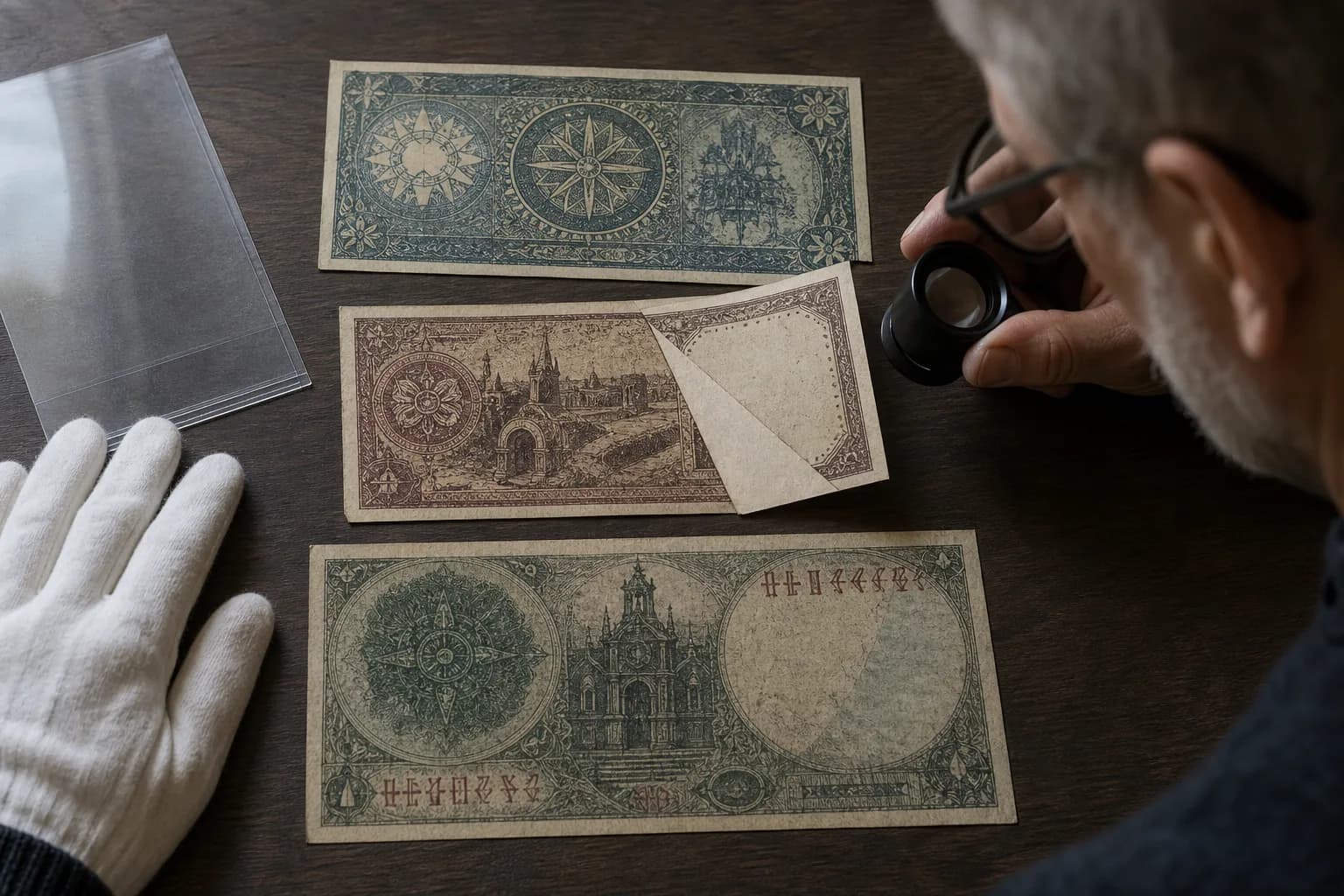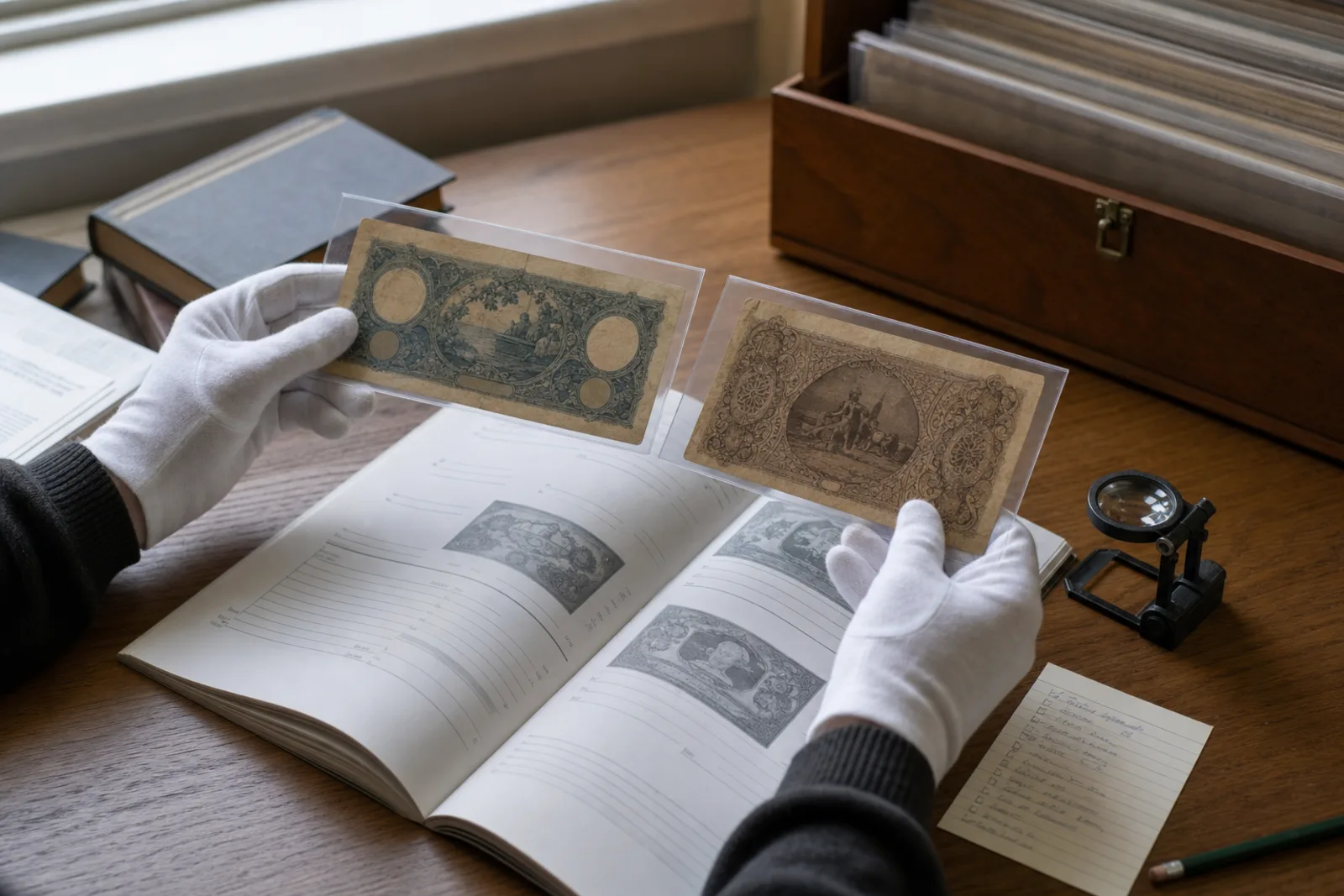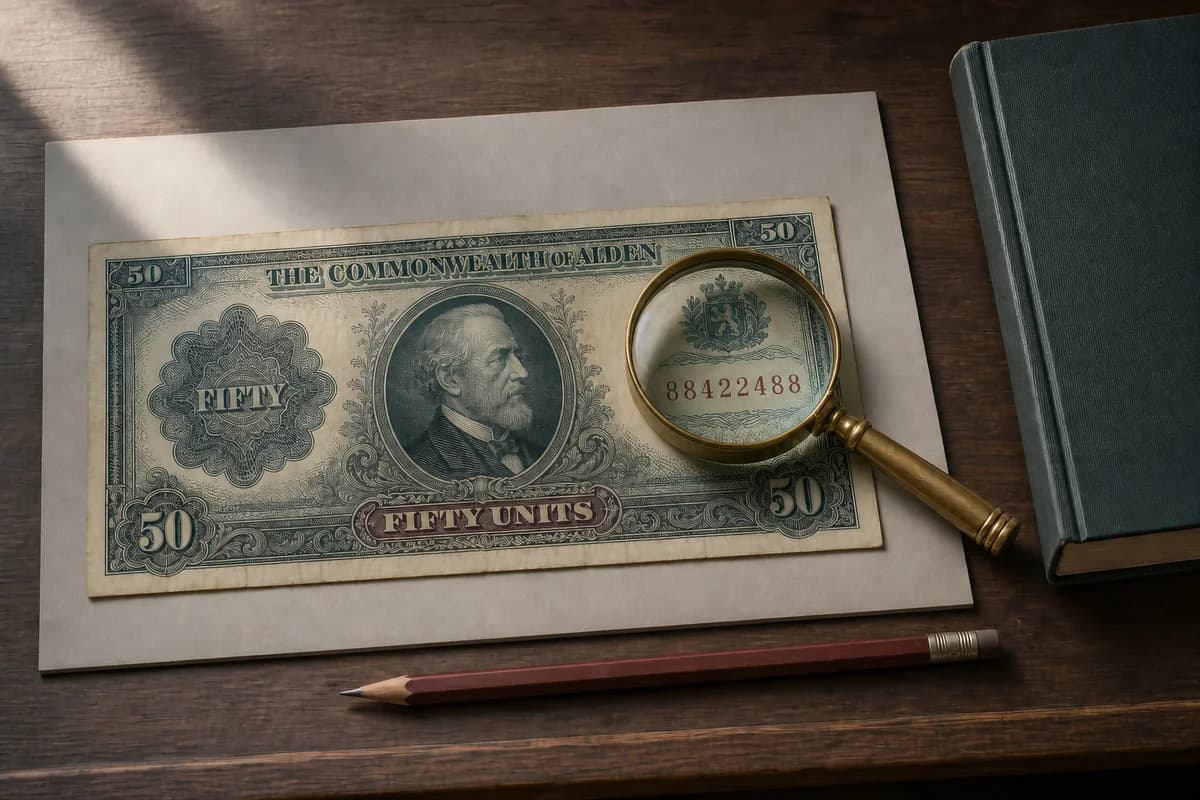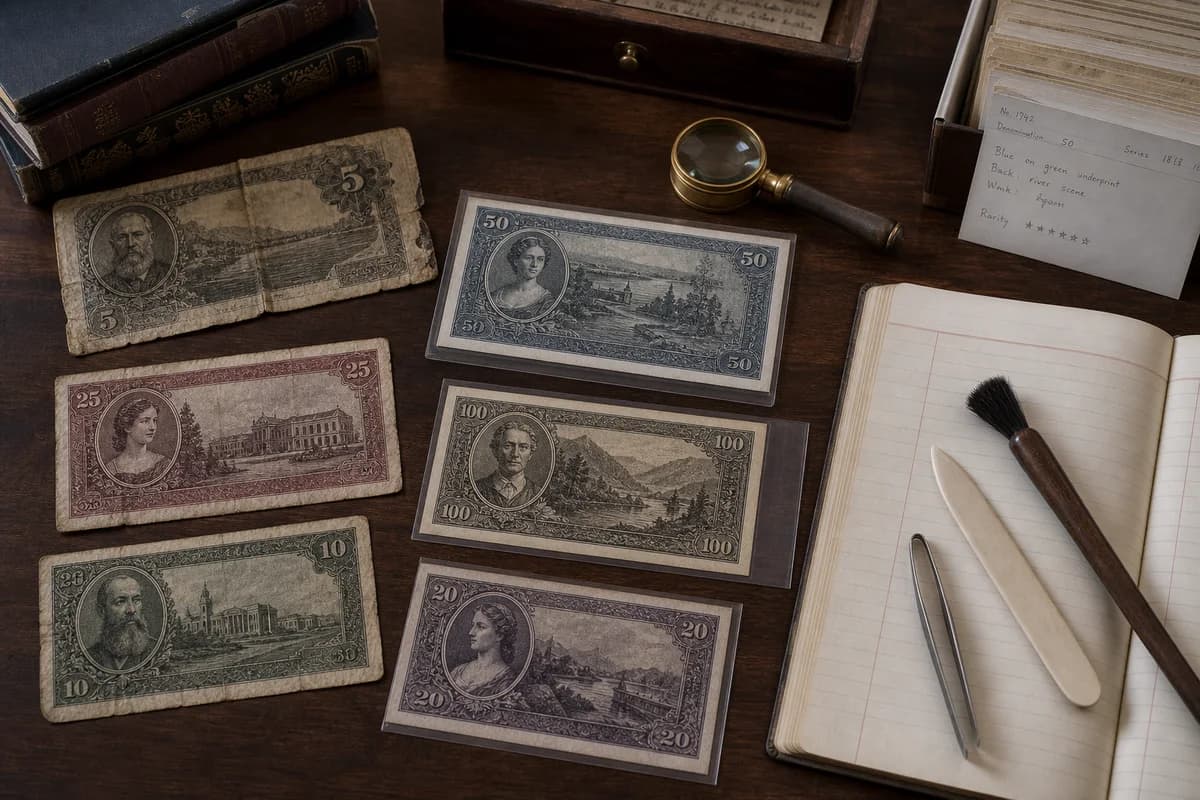
Quick answer
Replacement notes are printed to take the place of defective notes removed during production. A U.S. Federal Reserve replacement uses a star in its serial number, but world issues may use another symbol, prefix, suffix, or series. Verify the issuer and exact issue before judging scarcity or value.
Identify the marker before estimating anything
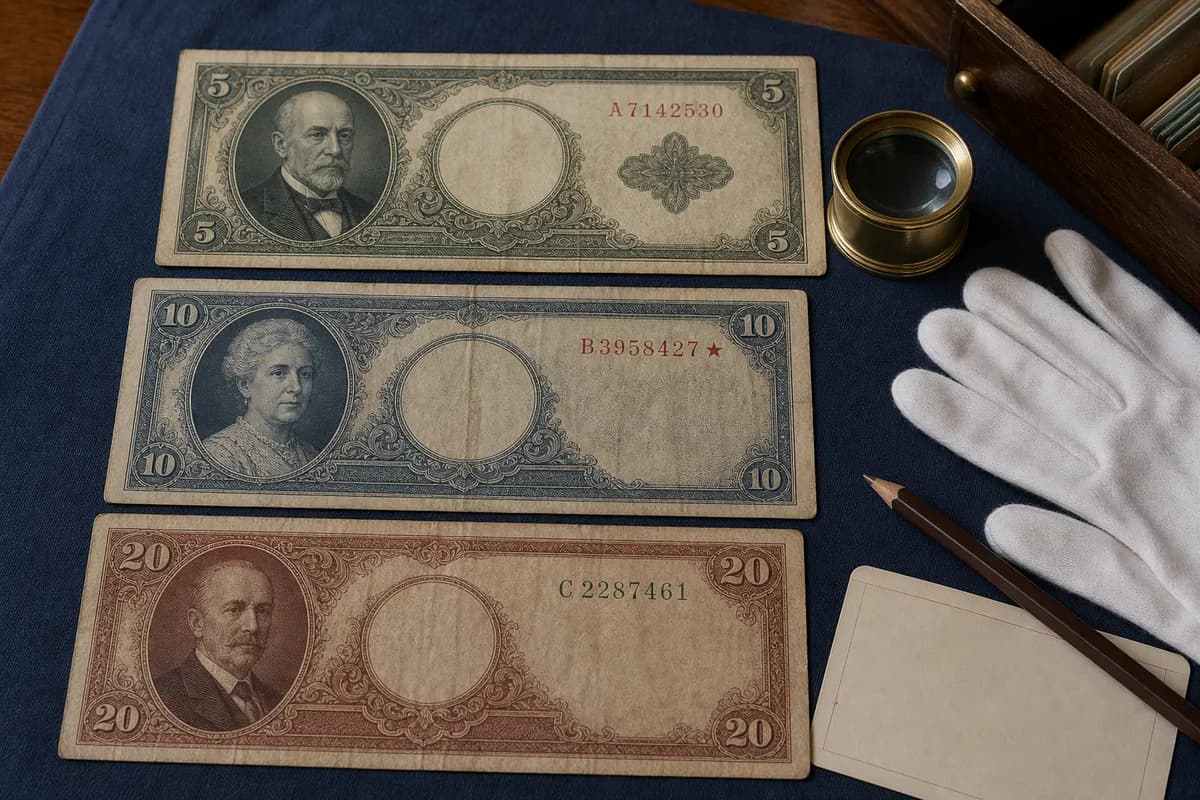
Replacement notes and star notes are banknotes made to replace defective pieces removed during production. On a modern U.S. Federal Reserve note, the familiar sign is a star at the end of the serial number. That definition does not make every star scarce, and it does not mean every replacement note around the world carries a star.
Start with the whole note. Record the issuing authority, denomination, series or date, signatures, printer, complete serial number, prefix, suffix, and every unusual symbol. Then compare those details with a reference for that exact issue. A symbol that identifies a replacement in one series can be ordinary in another.
Recognize a U.S. star note accurately
For current-format Federal Reserve notes, inspect both serial numbers on the front. They should match, and a replacement has a star in place of the final suffix letter. The U.S. Currency Education Program calls this a star suffix and states that it identifies a note serving as a replacement during production.
Keep the complete serial context. On denominations of $5 and higher from Series 1996 onward, the first serial letter relates to the series and the second to the Federal Reserve Bank. The $1 and $2 use a different prefix arrangement. Series year, denomination, district, facility indicators, and the star run all help define the variety.
Do not search the star alone. Include the denomination, series, district, facility indicators, and complete serial. A result for another issue or run may describe a different population. Also separate a serial star from a star-shaped design element, seal detail, handwritten mark, or damage. Clear front-and-back photographs make that distinction easier.
Expect different markers on world replacement banknotes
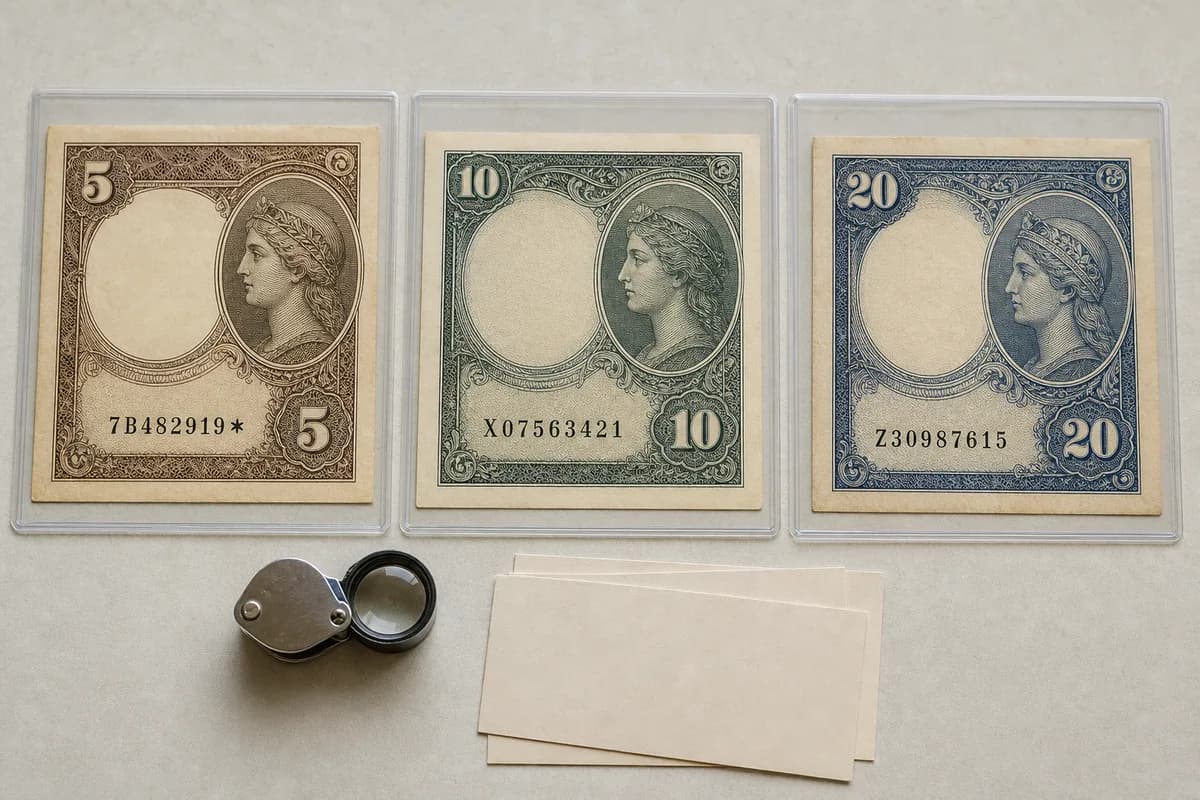
Star note is useful U.S. vocabulary, but replacement banknote is the broader term. Issuers have used stars before or after a serial, letters such as X or Z, unusual prefix or suffix combinations, special number ranges, and identifiers that changed from one series to the next. Some older replacements cannot be recognized from a simple symbol at all.
Official examples show why a universal lookup table is risky. India places a star between the prefix and serial number on the relevant Star Series notes. Brazil's central-bank records distinguish normal and replacement series, including historical asterisk-numbered issues. PMG documents world replacements with stars, Z prefixes, and other issuer-specific designators, while also noting earlier U.S. replacements without a star.
Treat the table as a starting point, not a catalog attribution. The exact series must confirm the marker.
| Issue context | Possible marker | What to verify |
|---|---|---|
| Modern U.S. Federal Reserve note | Star replacing the serial suffix | Denomination, series, district, complete serial, and official production records |
| Indian Star Series note | Star between the prefix and serial | Denomination, series, signature, year, and RBI issue information |
| Historical Brazilian issue | Asterisk or documented replacement series | Currency family, denomination, signatures, series range, and BCB records |
| Other world banknote | Letter, prefix, suffix, symbol, or special range | Issuer-specific catalog entry for the exact series, not a country-wide assumption |
| Older issue without an obvious marker | Numbering or production characteristic | Specialist catalog, archive, or recognized grading attribution |
Verify the exact issue in six steps
A reliable attribution begins with identification, not with a price search. Use the banknote photo identification guide to capture the full front and back before enlarging the serial area. Preserve the original image so cropping, sharpening, or color changes do not hide a faint prefix or turn damage into a false symbol.
- Identify the country or issuing authority, currency, and denomination from the complete design.
- Record the printed series, date, signatures, printer, watermark, and catalog number when known.
- Transcribe every serial character in order, including spaces, stars, prefixes, suffixes, and leading zeros.
- Compare the marker with an official issuer page, museum record, recognized catalog, or specialist reference for that exact series.
- Check whether the marker remained constant across the issue or changed by denomination, printer, year, or production method.
- Save the source, access date, and conclusion with the note so the attribution can be checked later.
Separate replacements, printing errors, and fancy serials
A replacement note usually represents quality control working as intended. The defective sheet was found and removed; the replacement was printed correctly and inserted to keep the count complete. An error note is different because a production defect escaped inspection and entered circulation.
The categories can overlap. A replacement note may itself show a genuine printing error, and its serial may also form a radar, repeater, solid, ladder, or low-number pattern. Each feature needs separate evidence. The fancy banknote serial number guide explains numeric patterns without treating every star as fancy.
Do not call uneven margins, wear, stains, ink loss, or a damaged star an error from a photo alone. Compare the normal issue, measure the note, inspect both serials, and seek specialist review when an error attribution would materially change value.
Measure scarcity with production and survival evidence
Replacement notes are produced for a narrower purpose than regular notes, but relative production alone does not tell you whether one example is scarce. A large replacement run can leave many ordinary survivors. A smaller run may still be easy to find if collectors saved the notes in quantity.
For U.S. Federal Reserve notes, start with BEP production reports and make sure the serial falls within the documented series, district, denomination, and run. A third-party lookup can help organize those records, but retain the official report behind the conclusion. For India, use RBI series information. For Brazil, consult the Banco Central do Brasil series ranges. Other countries may require a specialist catalog or archive.
Then check survival evidence: grading-service population reports, auction archives, dealer inventories, collection censuses, and repeated appearances of the same note. Population data are incomplete because many notes remain ungraded, some are resubmitted, and raw examples may never enter a public record. Apply the evidence tests in what makes a banknote rare before using the word rare.
Photograph, record, and protect the note
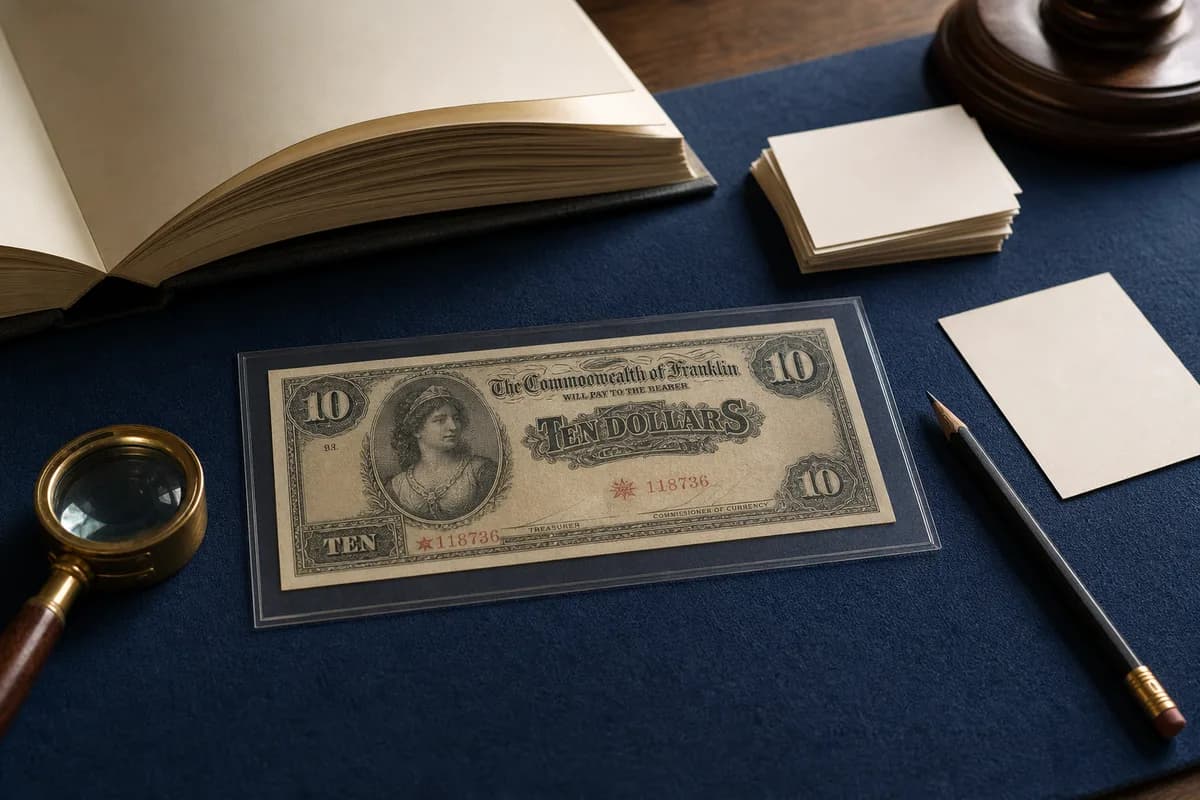
Photograph the complete front and back in even light, then make sharp close-ups of both serials, the replacement marker, signatures, and any printer or series code. Keep colors natural and include a scale outside the note when dimensions matter. Do not erase, wash, press, trim, or retouch the banknote to make the marker look clearer.
Money AI can help organize visible issuer, series, serial, and condition clues with the photographs and saved scan history. Its result is a research starting point, not official authentication, grading, error attribution, appraisal, or proof that a marker identifies a replacement.
Place a keeper in a correctly sized inert enclosure and retain any group, strap, or provenance record that explains how it was found. Follow the safe banknote storage guide and use the banknote grading guide to describe condition conservatively before comparing sales.
Use a disciplined keep, spend, sell, or grade decision
- Keep it when the replacement attribution is documented and the note fits your collection, even if the market premium is small.
- Spend or exchange a current note when the marker is common, condition is ordinary, and no reliable evidence supports collector value.
- Research a sale when several comparable transactions show demand for the same replacement variety and condition.
- Preserve a related group when consecutive notes, a packet, or provenance may supply production context.
- Seek a specialist when the marker is undocumented, the note may be altered, or a claimed error or rare variety would affect a sale.
- Consider grading only after the likely benefit exceeds fees, shipping, insurance, delay, and the risk of an uneconomic result.
Frequently asked questions
Is every star note a replacement note?
On modern U.S. Federal Reserve notes, a star in place of the serial-number suffix identifies a production replacement. Other issues may use a star differently, and many replacement banknotes use letters or special series instead. Verify the issuer, note type, and series before applying the term.
Are all replacement notes rare or valuable?
No. Replacement status is one variety feature, not proof of rarity or a premium. Production quantity, surviving population, exact series, denomination, condition, collector demand, and comparable sales determine whether the note is common, scarce, or valuable.
Is a star note the same as an error note?
No. A star note is normally the correctly printed replacement for a defective note removed by quality control. A genuine error note is a defective piece that escaped the production checks. A replacement can itself contain an error, but the star alone is not an error.
Where is the star on a U.S. replacement note?
On modern Federal Reserve notes, the star replaces the suffix letter at the end of the serial number. Earlier U.S. types can place a star at the beginning or end, while some older replacements had no star, so the note type and period still matter.
How can I check whether a world banknote is a replacement?
Record the complete serial, prefix, suffix, symbol, issuer, denomination, date, signatures, and catalog variety. Compare them with an issuing authority, museum collection, recognized catalog, or specialist reference for that exact issue. Do not rely on a generic list of country markers.
Should a replacement note be professionally graded?
Consider grading only when the exact variety, apparent scarcity, condition, authenticity concerns, and likely market justify the fees, shipping, insurance, and delay. Replacement status by itself rarely makes certification economical.
Sources and further reading
Explore the primary references used to prepare this collector guide.
- Bureau of Engraving and Printing: Serial Numbers
- U.S. Currency Education Program: Banknote Identifiers and Symbols
- Bureau of Engraving and Printing: Production Figures
- Reserve Bank of India: Frequently Asked Questions on Banknotes
- Reserve Bank of India: Issue of Star Series Banknotes
- Banco Central do Brasil: SISMECIR banknote series records
- Paper Money Guaranty: Reach for the Stars
- American Numismatic Association: Coin Collecting FAQs