Quick answer
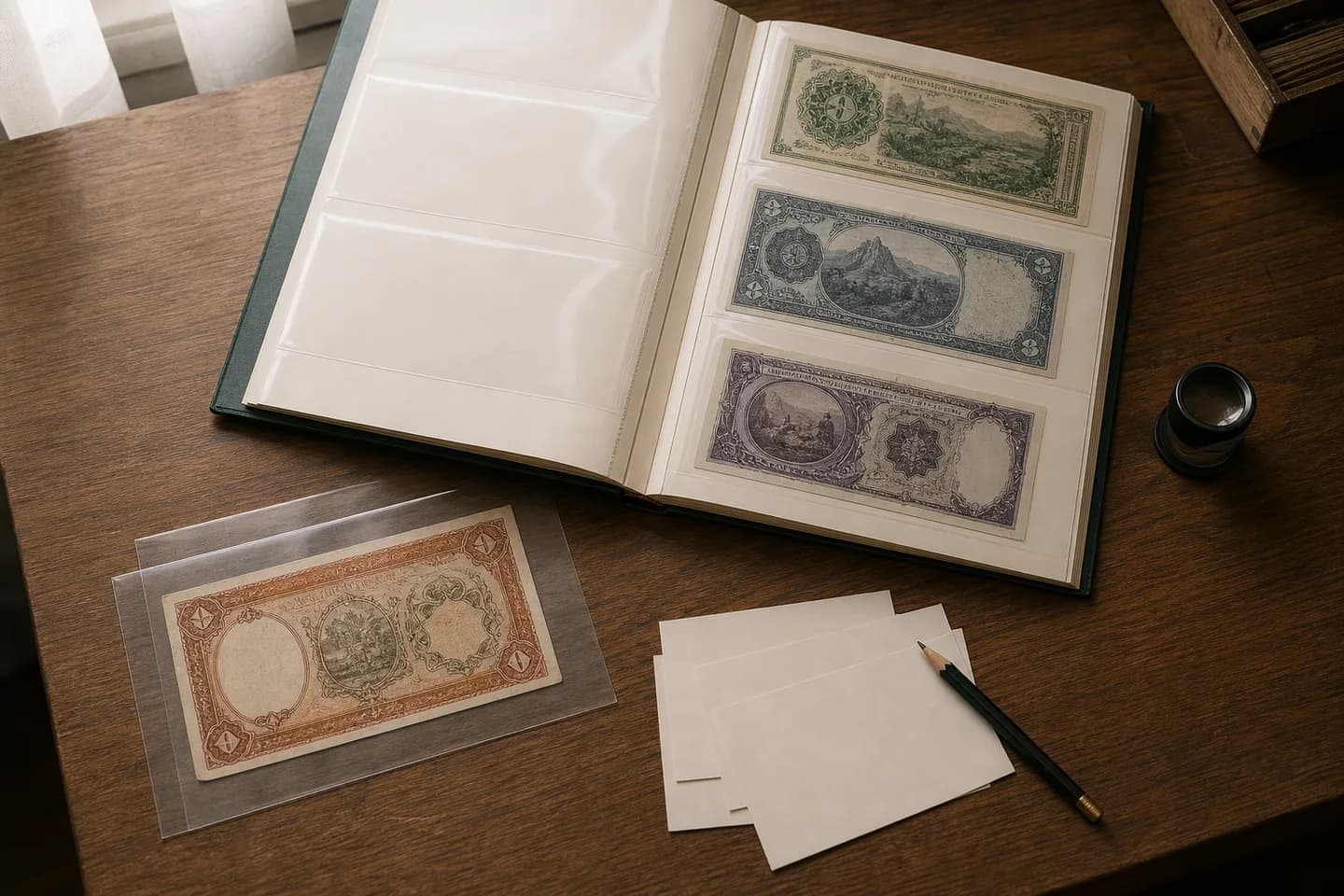
Paper money collecting for beginners starts with one narrow theme, a spending limit, safe sleeves, and a simple inventory. Learn to identify and grade each note before buying, compare the seller's description with reliable references, and expand only after you understand the first group.
Start with a collection rule you can explain
A collection becomes easier to research when it has a boundary. Pick one issuer, country, era, denomination, material, design theme, or issue type for the first ten to twenty notes. The rule can change later. Its immediate job is to stop every attractive banknote from becoming an automatic purchase.
Write the rule as one sentence: one current note from each country visited, one design type from a national series, wildlife on world banknotes, or low-cost notes issued between two dates. Add a maximum condition and price if those limits matter. A precise rule tells you what belongs, what is missing, and why a duplicate might still be useful.
The American Numismatic Association treats collecting as a hobby first and recommends education after choosing an area. PMG likewise lists type, theme, location, and other focused sets. Enjoyment and knowledge should shape the collection before price does.
Choose a beginner focus that fits your budget
An inexpensive theme is not a lesser collection. A documented group of common notes can show design change, political history, printing methods, or regional iconography more clearly than unrelated rare pieces. Availability matters too. A set that requires years of specialist auctions may frustrate a new collector who mainly wants to learn.
Use the table as a filter, not a shopping list. Look at examples in catalogs, museum databases, dealer inventories, and collector exhibits before choosing. Note which group keeps drawing your attention after the first excitement fades.
| Focus | Why it works | Main risk | Useful first limit |
|---|---|---|---|
| One note per country | Broad visual variety and easy entry | Buying random bundles without identification | One confirmed issuer per country |
| A local type set | Strong references and a clear completion goal | Paying too much for minor varieties too early | One design type in any affordable grade |
| A design theme | Personal and flexible across countries | Letting the theme become too broad | One subject and one album page |
| Current or withdrawn notes | Often accessible at modest cost | Assuming future rarity | Collect for design or history, not prediction |
Build the minimum kit before buying more notes
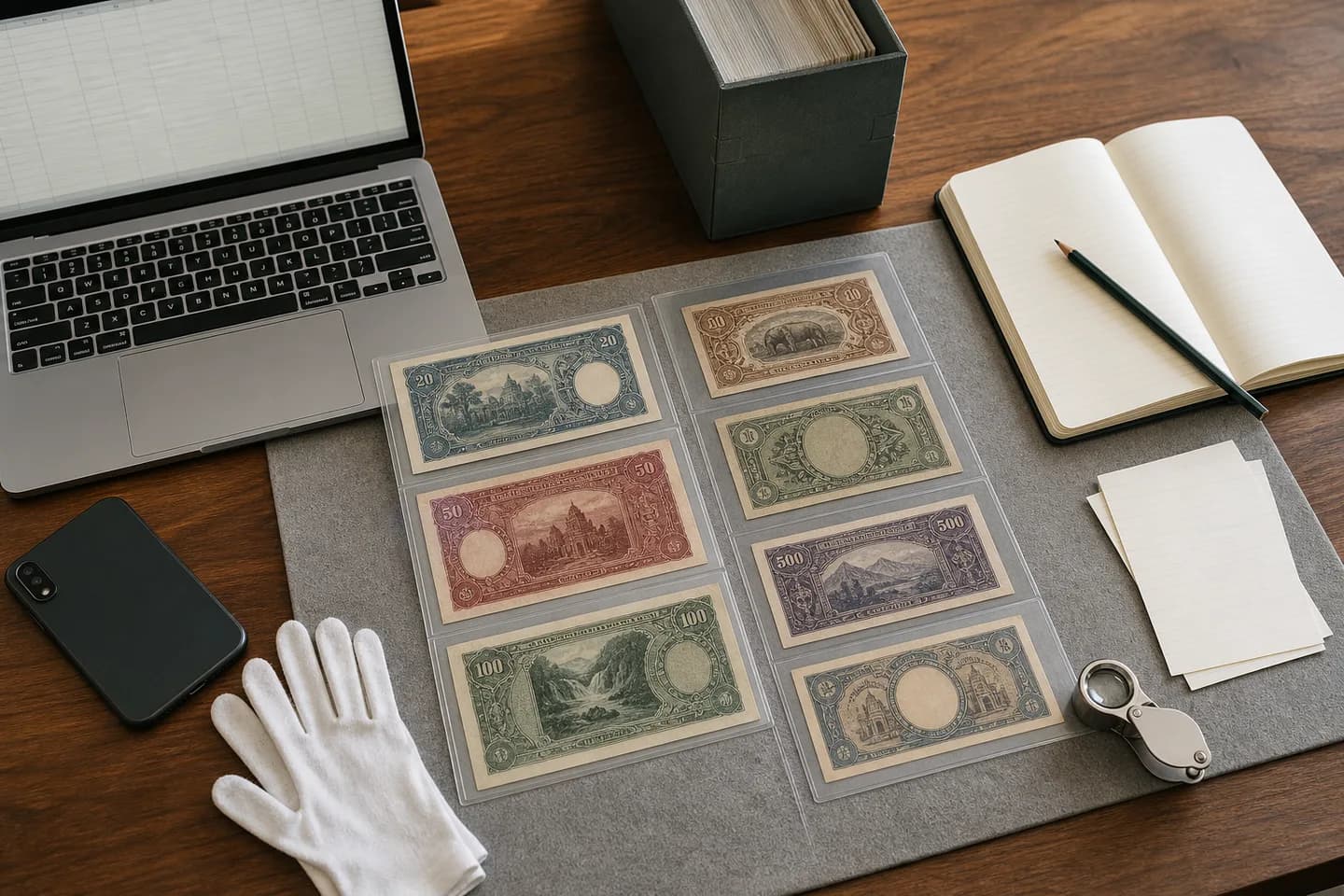
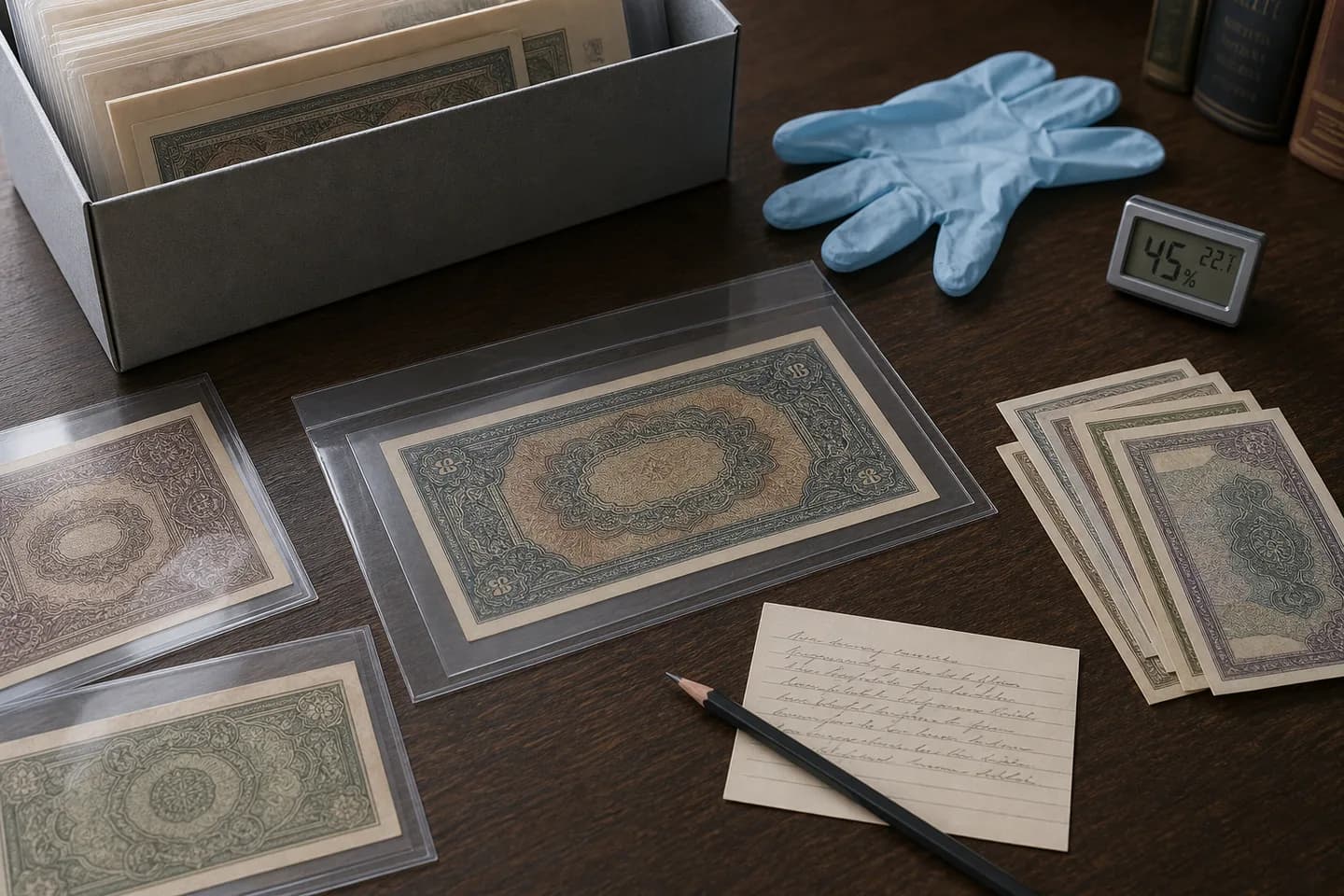
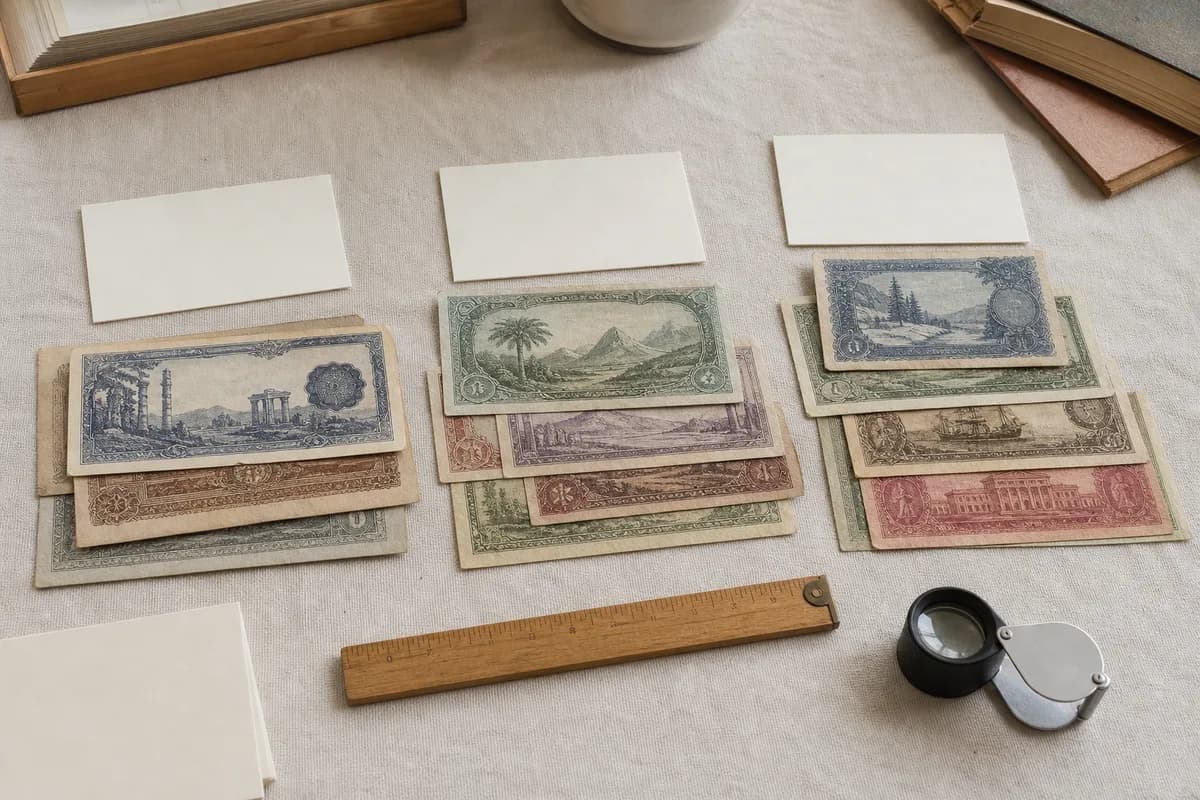
Begin with correctly sized individual sleeves made from a named inert material such as unplasticized polyester, polypropylene, or polyethylene. Add a rigid box or suitable album that supports the sleeved notes flat. A clean work surface, soft pencil for external labels, ruler, and modest magnification cover most early tasks. You do not need chemical cleaners, adhesives, a press, or elaborate lighting.
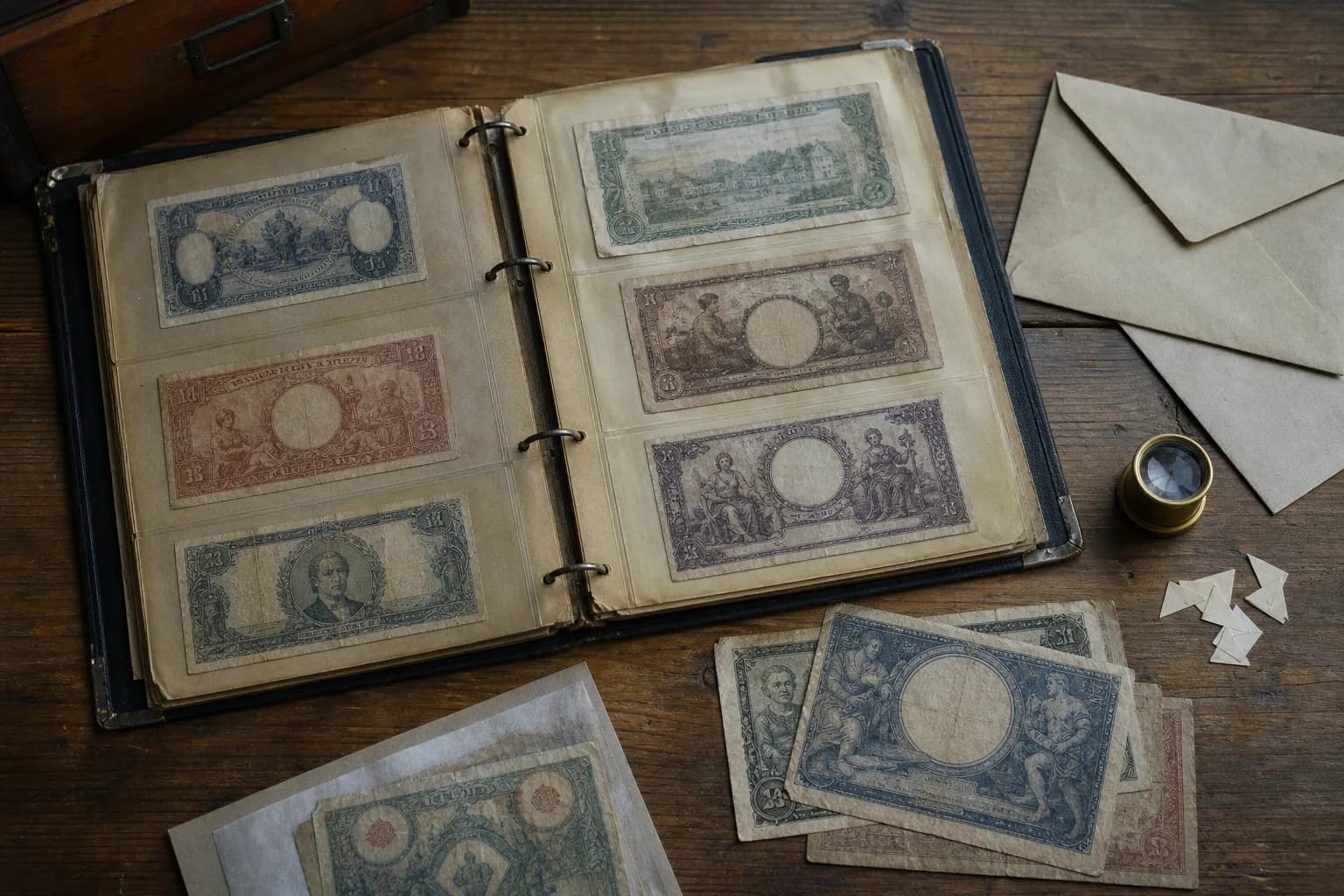
Buy storage for the largest note in the planned group, then check that pages and boxes do not bend smaller sleeves. Separate the banknote from any paper label so graphite, ink, or acidic card does not touch it. The safe paper money storage guide explains materials, environmental control, and layered protection.
Handle notes only when necessary, with clean and dry hands over a clear surface. Support the full sheet rather than gripping a corner. Smithsonian preservation guidance emphasizes stable conditions, protection from light, clean hands, and avoiding tape or adhesives for paper records.
Identify every note before deciding it belongs
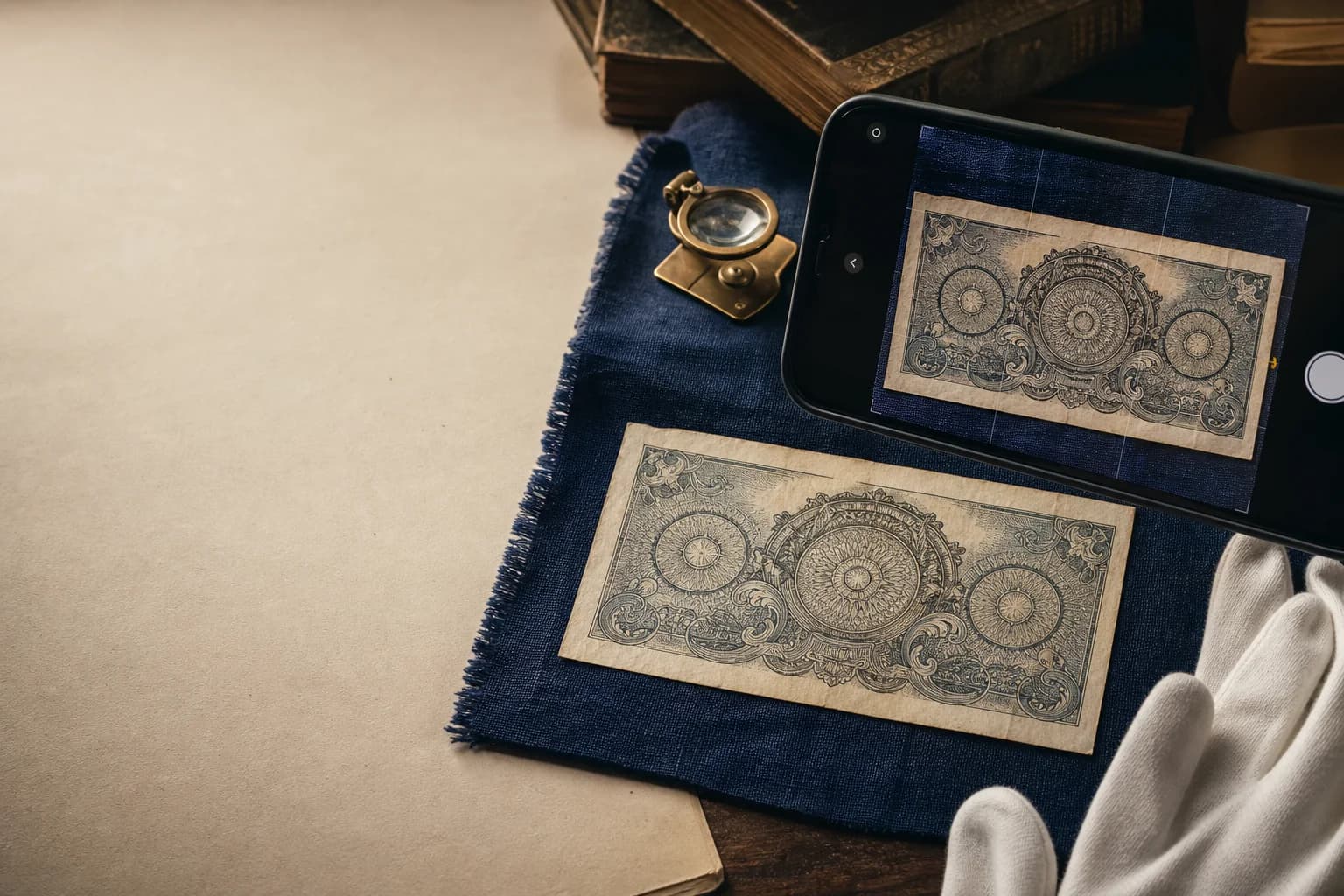
Record the issuing country or authority, denomination, series or issue, date, signatures, serial prefix, material, and dimensions. The front alone may not contain the best clue. Photograph the complete front and back, then capture details such as a watermark, printer imprint, overprint, or unfamiliar script. Follow the banknote photo identification workflow when a note is hard to place.
If the language or country is unfamiliar, start with issuer text, script family, symbols, and denomination instead of translating every line. The foreign currency identifier guide shows how to preserve context while narrowing the issue. Do not treat a similar portrait or color as an exact match.
Money AI can organize visible issuer, denomination, series, date, and serial clues from several photos and keep the result in scan history. Use it as a research starting point. It is not official authentication, professional grading, an appraisal, counterfeit detection, or a guaranteed value, so check uncertain results against authoritative references.
Learn condition without chasing a perfect grade
Condition describes what happened to the note. Look for circulation folds, handling bends, paper body, color, centering, corners, edge splits, stains, pinholes, writing, repairs, pressing, and washing. Compare the whole note with published grade descriptions. Do not choose a grade from one flattering photograph.
A lower-grade note can be the sensible first example if it is genuine, clearly described, and priced accordingly. A high-grade note is not automatically scarce, and a common uncirculated note can remain common. Read the banknote grading guide before paying a large premium for a condition label.
Never clean, iron, press, erase, tape, or flatten a collectible banknote to improve its appearance. Those actions can alter paper, ink, embossing, and evidence of original condition. Consult the old banknote cleaning guide before doing anything irreversible.
Buy slowly and verify the description
Before paying, compare the seller's title, photographs, and description with an independent reference. Confirm that the images show the same physical note, including the serial, margins, stains, and edge damage. Ask for complete front and back photographs when either side is missing. A stock image cannot establish the condition of the item you will receive.
Check return terms, payment protection, location, shipping method, and the seller's history with numismatic material. For a larger purchase, prefer an established dealer, show, or auction house with clear business details and a written description. The ANA dealer and club directories can help locate accountable specialists, but every note and set of terms still needs inspection.
Treat urgent claims, vague rarity language, unsupported catalog numbers, and investment promises as reasons to pause. Search the exact issue in completed transactions, not only active asking prices. The old banknote value guide explains how to compare similar examples without turning one sale into a price guarantee.
Understand rarity before paying for the story
Age, a large denomination, a low serial, or an unusual portrait can be interesting without being rare. Rarity depends on the exact issue or variety, surviving supply, condition distribution, market appearances, and collector demand. First identify the note. Then ask what evidence shows that few comparable examples are available.
Use issue records, catalogs, grading population reports, auction archives, and specialist research together. Each source has limits. Print quantity is not a survivor count, a grading census can contain resubmissions, and a sparse auction record may reflect weak demand rather than scarcity. The banknote rarity guide provides a documented audit.
A beginner does not need to solve every rarity question. Mark the field as unknown, save the source, and avoid paying a premium until the evidence improves. Honest uncertainty is part of good cataloging.
Create an inventory while the collection is small
Assign each note a simple inventory number that appears on its external holder label and in a notebook or spreadsheet. Record issuer, denomination, series, date, catalog reference if verified, serial, material, dimensions, condition notes, source, acquisition date, total cost, and storage location. Keep the label separate from the banknote.
Photograph both sides in neutral light and retain the original files. Add one sentence explaining why the note fits the collection. This exposes accidental purchases and makes a future handover easier. It also separates facts observed on the note from claims copied from a seller.
Record buyer fees, tax, shipping, and storage with the purchase price. Do not replace original cost with an optimistic estimate. If you later research value, date the estimate and list the comparable records used. A clean acquisition history is more useful than a changing number without evidence.
Use a 30-day plan instead of a shopping spree
Week 1: choose and map the set
Write the collection rule, monthly limit, and stop conditions. Browse reference catalogs and institutional collections. List ten possible notes with issuer, approximate availability, size, and the reason each belongs. Buy storage that fits the plan before buying a bundle.
Week 2: study five real examples
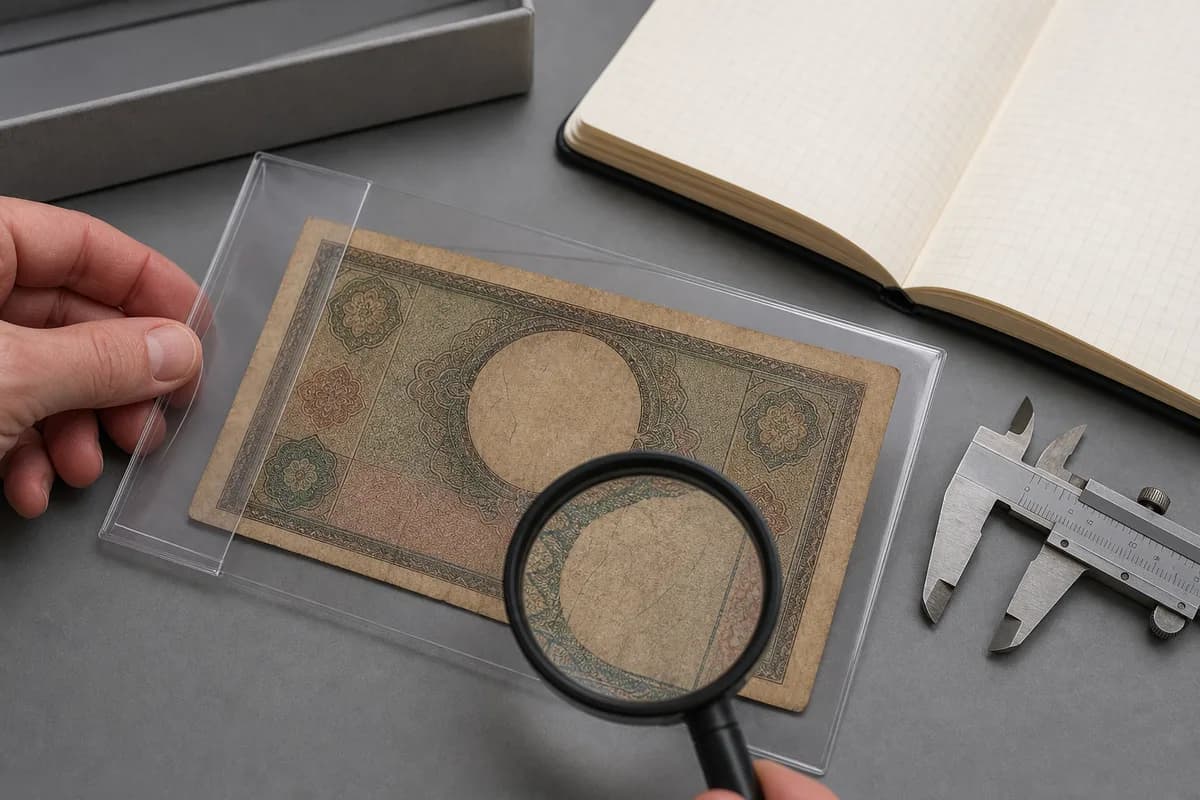
Practice identifying notes already owned, borrowed for study, or found in circulation. Compare front and back, record dimensions, and describe condition without assigning a precise numerical grade. Check each conclusion against a second source.
Week 3: make one deliberate acquisition
Choose one affordable note that clearly fits. Verify the seller, description, photographs, return terms, and total cost. Save the listing or receipt. When the note arrives, compare it with the description before the return window closes.
Week 4: catalog and review
Sleeve, photograph, and inventory the note. Review whether the theme still feels interesting, the limit was realistic, and the references answered your questions. Adjust the next-month list rather than expanding the scope immediately.
Know when to ask a specialist
Seek experienced help when authenticity, alteration, a claimed printing error, scarce variety, hazardous contamination, or a major purchase cannot be resolved from reliable references. Share complete photographs, dimensions, acquisition context, and the exact question. A focused request is easier to answer than a demand for a price from one cropped image.
Professional grading may help with a valuable, often-counterfeited, or condition-sensitive note, but fees, shipping, insurance, delay, and likely resale benefit belong in the decision. Certification is not necessary for every keeper and does not turn a common note into a rare one.
Clubs and collector societies are useful for vocabulary, references, exhibits, and introductions to specialists. Community advice can reveal what to investigate, but factual claims about the note still need an issuer, catalog, museum, grading service, or other suitable authority.
Frequently asked questions
How do I start collecting paper money?
Choose a small theme, set a monthly limit, obtain safe PVC-free sleeves, and begin with inexpensive notes you can identify. Record the issuer, denomination, series, date, condition, source, and cost for every addition. A focused first set teaches more than a random pile.
What banknotes should a beginner collect?
Start with notes that match a genuine interest and remain easy to research. Current or recently withdrawn world notes, one note per country, a local type set, or a design theme are manageable choices. Avoid building the plan around promised investment returns.
How much money is needed to start a banknote collection?
There is no required amount. Notes from circulation, travel leftovers, family gifts, and inexpensive dealer boxes can form a useful starter group. Spend first on safe storage and references, then buy slowly within a fixed hobby budget.
Should beginners buy graded banknotes?
Not automatically. A graded holder can make an expensive or heavily counterfeited issue easier to trade, but certification does not guarantee a good price or fit. Learn the note and compare total costs before paying a holder premium.
How should a new banknote collection be stored?
Place each note flat in a correctly sized enclosure made from a known inert material, then keep the sleeves in a dark, stable, dry location. Avoid soft PVC, tape, clips, rubber bands, lamination, direct sunlight, damp basements, and hot attics.
Sources and further reading
Explore the primary references used to prepare this collector guide.
- American Numismatic Association: Collecting, storage, and dealer FAQs
- Paper Money Guaranty: Introduction to Paper Money Collecting
- International Bank Note Society: Introduction to Banknotes and Banknote Collecting
- Smithsonian Institution Archives: Preserving Family Papers
- Paper Money Guaranty: Banknote Buying Guide