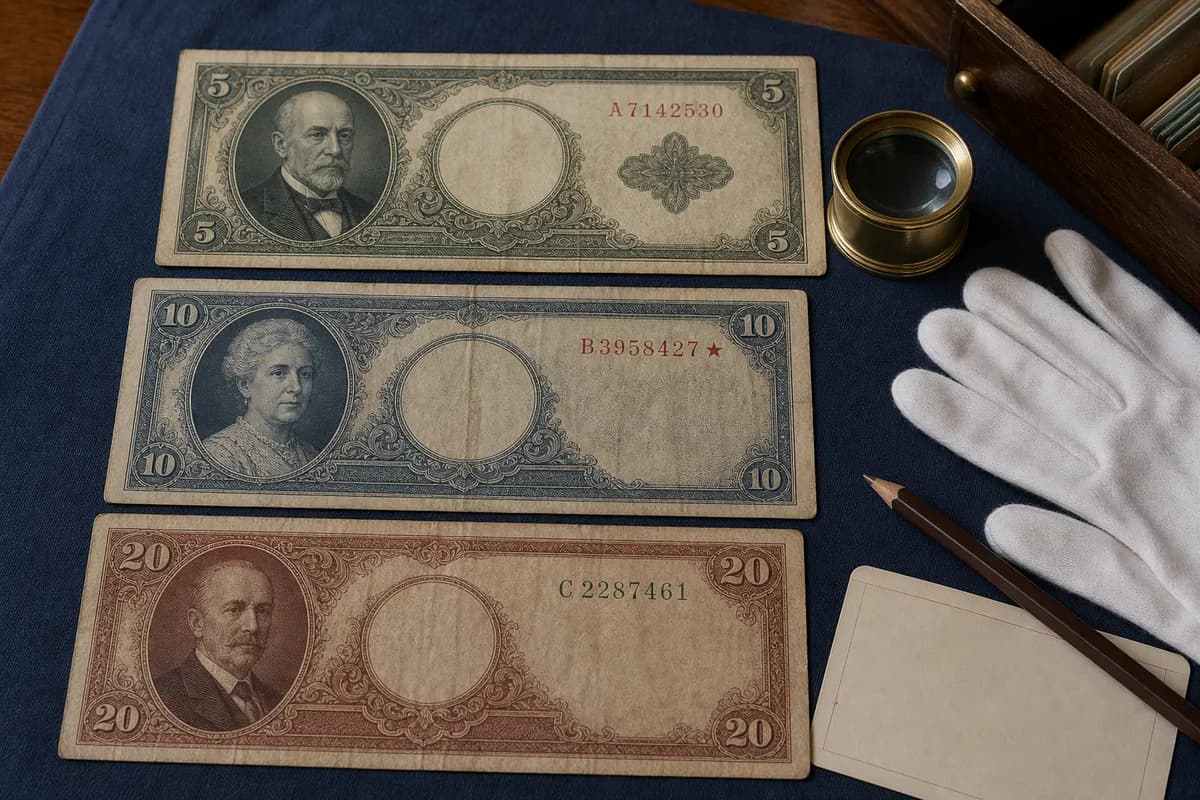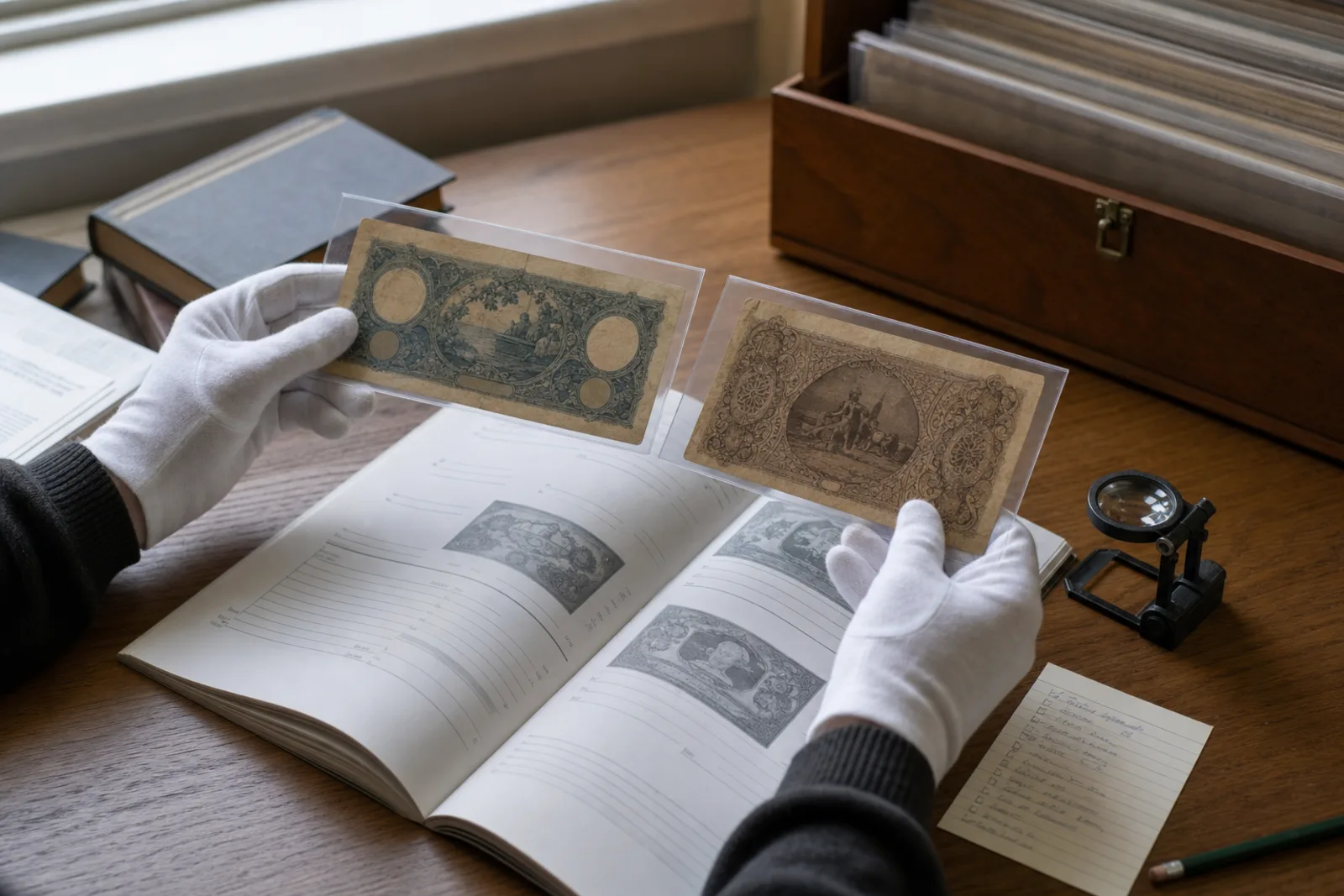
Quick answer
A banknote Pick number is the reference assigned to an issue in the Standard Catalog of World Paper Money. It is usually written with P and a number, sometimes followed by a variety or status suffix. Always record the issuing country, full catalog code, denomination, date, signatures, and other distinguishing features because the number alone does not identify an individual note or establish authenticity, rarity, grade, or value.
A Pick number identifies a catalog entry, not your individual note
A banknote Pick number is shorthand for an entry in the Standard Catalog of World Paper Money. The system takes its name from German numismatist Albert Pick, whose cataloging work became the basis of the reference. In collector writing, the code is usually shown as P- followed by a number, although catalog and dealer formatting varies.
The reference points to an issue or listed variety shared by many physical notes. Your banknote may have its own serial number, but that is a different identifier. A serial belongs to one piece or print position. A Pick number groups notes that the catalog treats as the same issue. This distinction answers a recurring beginner question and prevents inventories from mixing two unrelated fields.
The number also needs context. Pick sequences restart within country or issuing-area sections, so a bare code such as P-12 can match unrelated notes from several places. Write the country or issuer, denomination, date or series, and the complete catalog code together.
| Field | What it identifies | Where to find it | What it cannot prove |
|---|---|---|---|
| Country plus Pick number | A cataloged issue or variety | Catalog, grading label, specialist listing, or verified database | Which individual note you own |
| Serial number | One physical note or production sequence | Printed on the banknote | The correct catalog variety by itself |
| Date and signatures | Issue details that may separate varieties | Printed design and catalog description | Authenticity or value alone |
| Grade | A condition opinion for one note | Careful examination or grading label | Catalog identity unless the attribution is also shown |
Read the prefix, main number, and suffix as one code
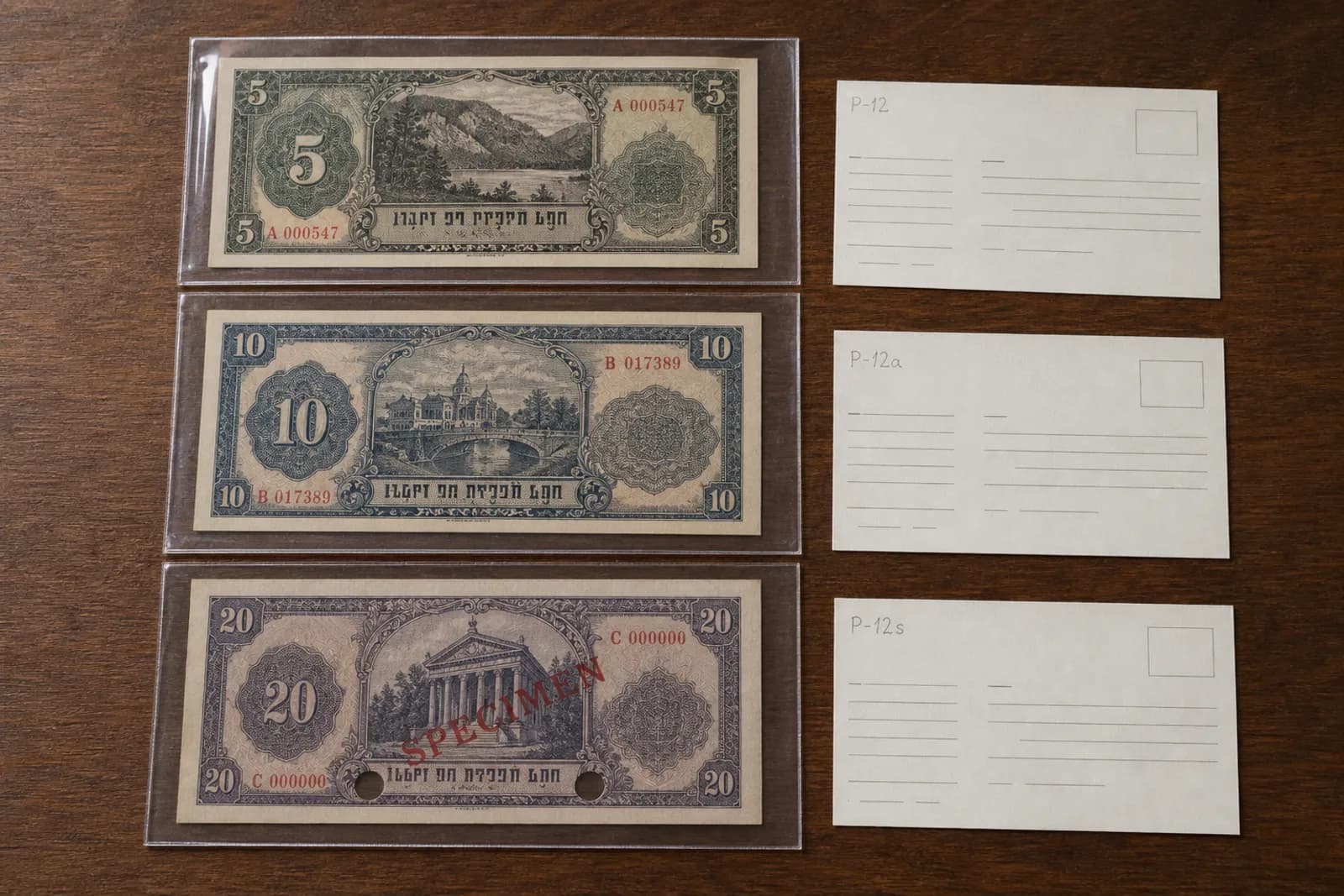
P is the familiar prefix for a regular Pick reference, but specialized listings can use other prefixes. The main number locates an entry within the relevant geographic section. A following lowercase letter often distinguishes a subvariety. A code such as P-12a should therefore be copied in full, not shortened to P-12.
Suffixes are not universal promises. One catalog entry may separate signatures with a and b, while another gives a new main number to a design change. Letters such as s are commonly associated with specimens, and other letters may describe remainders, replacements, proofs, or related status. The exact entry and edition control the meaning.
Current collector discussion shows why guessing fails. Small design changes sometimes receive new main numbers, while larger-looking changes remain suffix varieties. Treat the code as an editorial decision in a particular reference, not a scientific formula that can be reconstructed from appearance alone.
- Record punctuation exactly enough to preserve prefix, number, and suffix.
- Keep specimen or replacement status in a separate field as well as in the catalog code.
- Include the catalog title or abbreviation when several systems are used.
- Add the edition or access date because attributions can be corrected.
- Do not invent a suffix for an unlisted signature or date.
Identify the banknote before searching for its Pick number
Start with the issuer, country or territory, denomination, currency unit, date, series, language, substrate, signatures, watermark, overprint, and major design. The foreign banknote identification guide gives a repeatable order for these clues. A catalog search based only on color and denomination can land on the wrong country, period, or issuer.
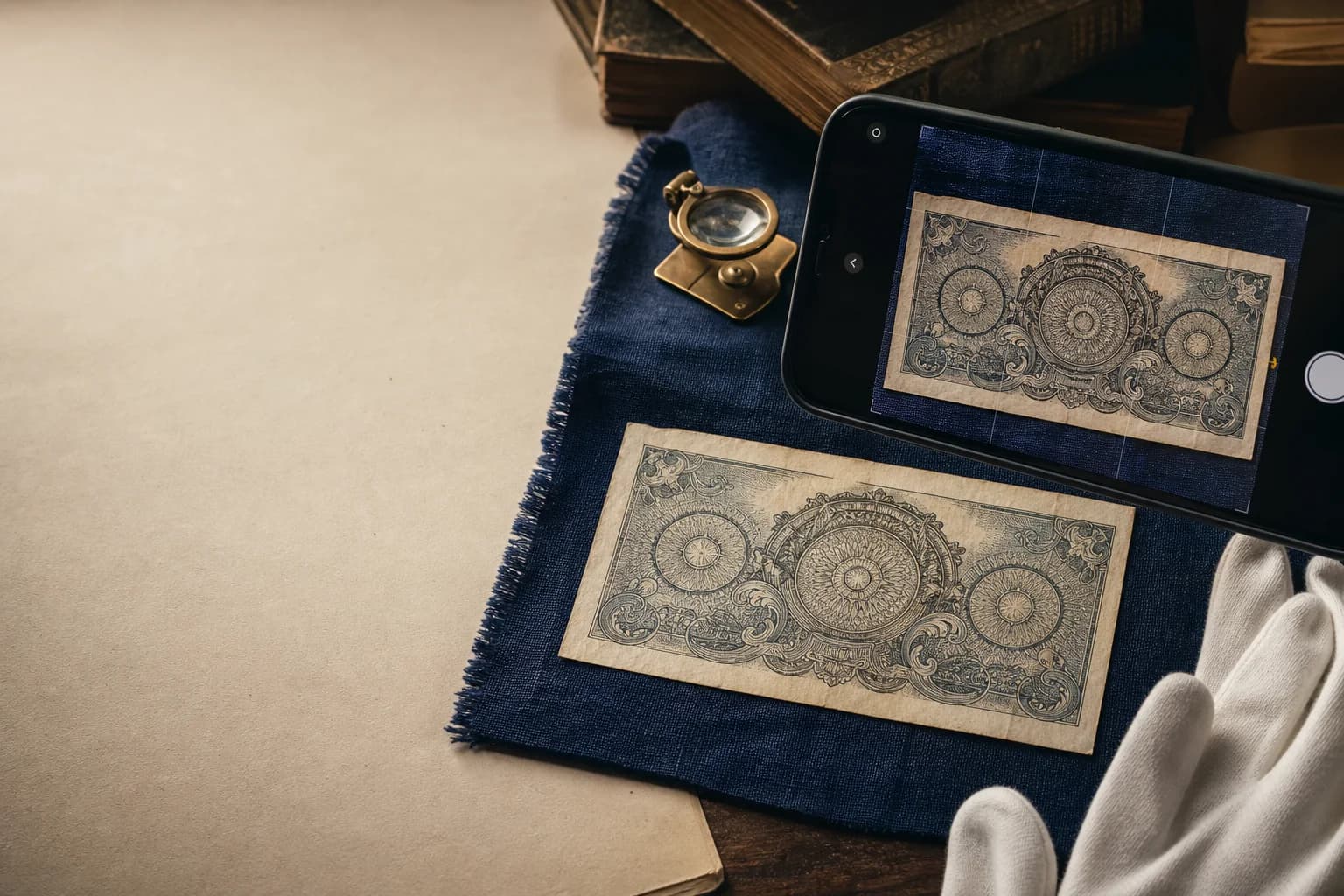
Take complete front and back photographs before comparing small differences. Follow the banknote photo guide so dates, signatures, margins, serials, and security features remain readable. Do not crop away an overprint or reverse-side issuer line because it may be the evidence that separates two entries.
Then open the relevant country section and narrow by denomination and design. Compare the full description rather than accepting the first matching image. Catalog images can show a representative subtype, and scans on third-party sites may be mislabeled.
- Issuer name and issuing territory
- Denomination and currency unit
- Printed date, series, and signature combination
- Front and back design, color, and dimensions
- Watermark, security thread, substrate, and overprint
- Specimen, proof, replacement, remainder, or error status
Compare every variety field before accepting a suffix
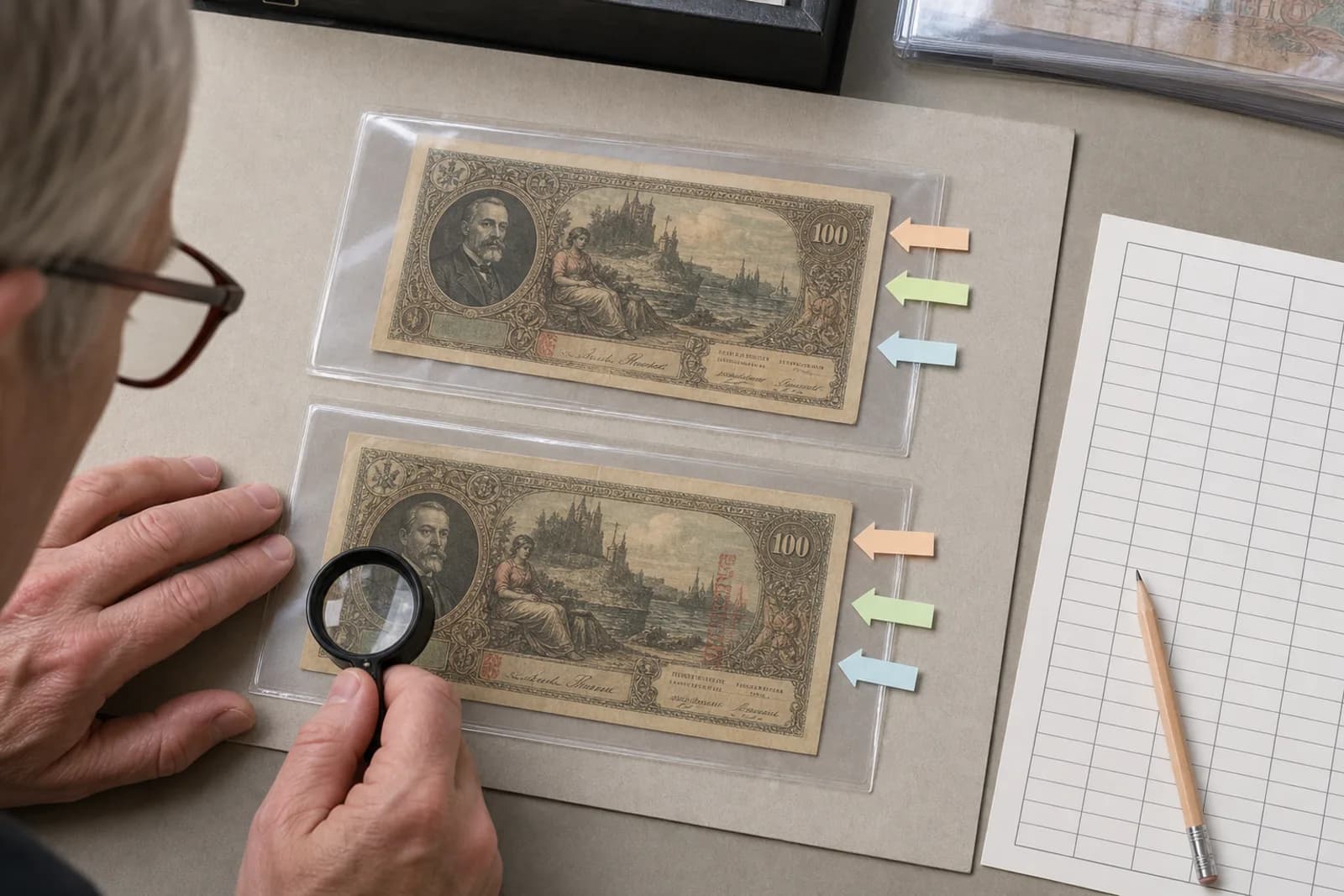
Two notes with the same central design may differ in signatures, date, printer imprint, watermark, thread, color, overprint, or legal wording. These changes can produce a suffix, a separate main number, or no separate listing. Check each field named in the catalog and keep an unresolved attribution when a decisive area is hidden or damaged.
A marketplace title or grading-label photograph is a lead, not the underlying authority. Transcription errors spread when one listing copies another. Verify the code against the catalog entry or a current database that identifies its catalog source. If references disagree, record both attributions with dates instead of silently choosing the more valuable one.
Do not force an uncataloged note into a neighboring variety. Emergency money, local issues, private scrip, fantasy pieces, and newly released notes may be outside a volume or await cataloging. The absence of a Pick number does not by itself prove that an object is false, and having a listing does not prove that the piece in hand is genuine.
Use more than one reference when the attribution matters
The Pick system remains widely used by collectors, dealers, auction houses, and grading services, but it is not the only catalog. National catalogs, issuer archives, The Banknote Book, regional references, and collection databases may use different codes or divide varieties differently. Label every code with its system so two unrelated numbers do not look like a contradiction.
PMG and NGC announced in 2026 that they had acquired the Pick and KM catalogs and intended to develop their databases. That is relevant to current availability, but it does not make every older price or attribution automatically current. Preserve the edition or access date and revisit entries when a correction could change identity.
For an ordinary inventory, one well-verified code plus the observable issue details is enough. For an expensive purchase, disputed variety, grading submission, or publication, compare the catalog, an issuer or museum source where available, and a second specialist reference.
| Source | Best use | Caution |
|---|---|---|
| Standard Catalog or current rights-holder database | Pick entry, prefix, suffix, and listed varieties | Note edition, update date, and corrections |
| Central bank, archive, or museum | Issuer history, dates, specifications, and official series | May not use collector catalog numbers |
| Specialist national or regional catalog | Fine varieties and local terminology | Uses its own numbering system |
| Auction or dealer archive | Attributed examples and market language | Verify descriptions and do not treat asking prices as evidence |
| Community discussion | Repeated confusion and leads to investigate | Not a factual authority |
Store the Pick number as one part of a durable inventory record
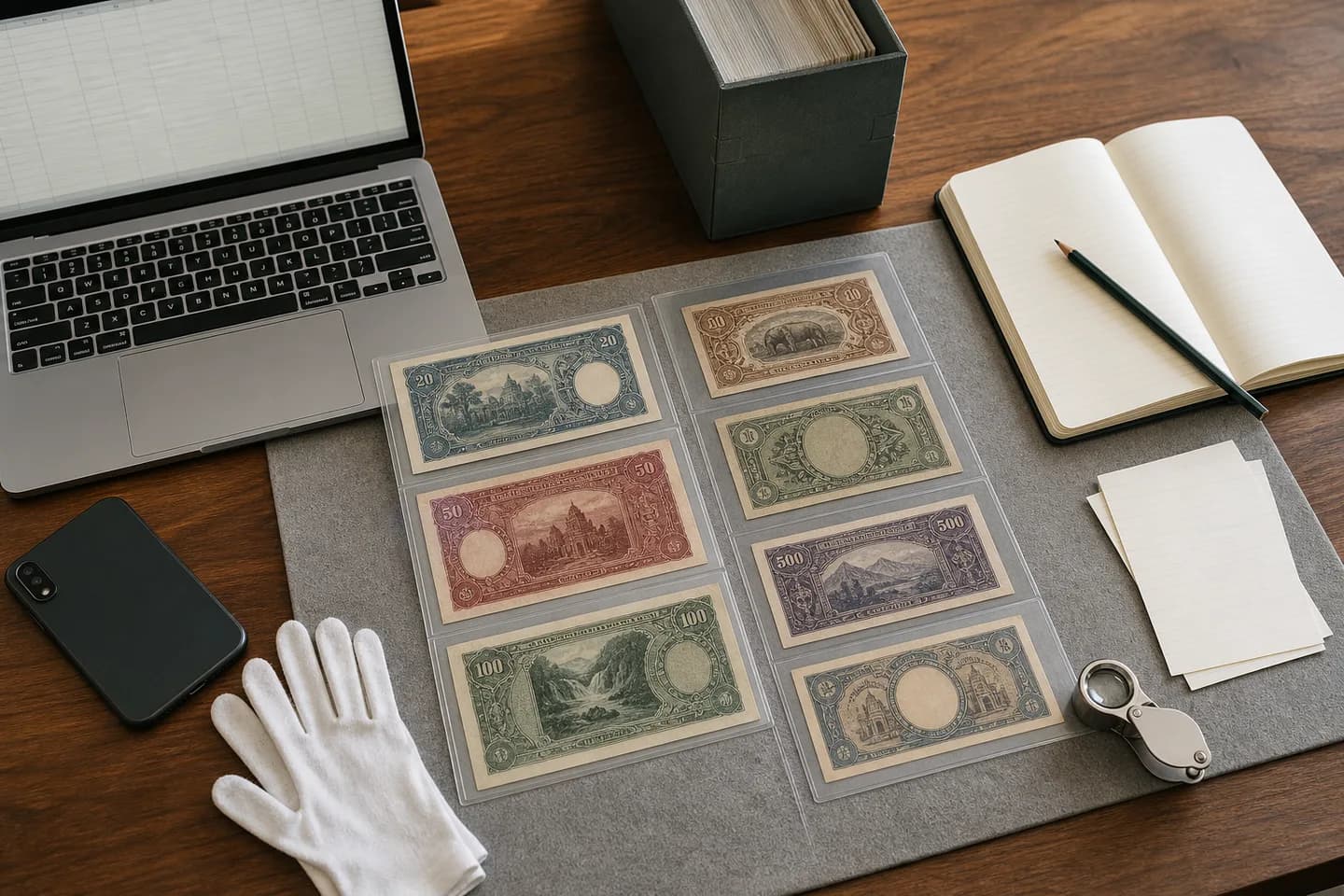
A useful record includes country, issuer, denomination, currency, date, series, full Pick code, alternate catalog codes, signatures, serial number, substrate, watermark, dimensions, condition notes, source, access date, and image filenames. The app-versus-spreadsheet guide explains how to keep exports and backups independent of one tool.
Money AI can help organize visible issuer, denomination, series, date, serial, and material clues from clear front and back photographs. It cannot guarantee a Pick attribution, authenticate the note, assign a professional grade, or determine current value. Confirm the catalog code yourself and attach the reference used.
Keep uncertainty explicit with statuses such as confirmed, probable, and unresolved. A note labeled “probable P-12a; signature unreadable” is more useful than a confident but unsupported code. If later evidence changes the attribution, retain the old value in a change note.
Do not turn a catalog number into a value claim
A correct Pick number narrows the market comparison, but it does not set a price. Catalog values can be old, generalized, or based on condition categories that do not match your note. Use the code to find the exact variety, then compare completed sales with similar grade, problems, certification, and date.
A suffix is not automatically rare. Some varieties are common, some are scarce, and others are difficult only because attribution is confusing. The replacement-note guide shows why issuer-specific evidence matters, while the banknote rarity guide separates a distinct variety from actual supply and demand.
Never raise the attribution to match an optimistic listing. If the watermark, signature, or overprint cannot be confirmed, research both possibilities and price the uncertainty conservatively. Authentication and grading are separate physical judgments.
Use a six-step Pick-number verification workflow
First identify the issuing country or authority. Second capture both sides and the decisive details. Third locate the design in the correct country section. Fourth compare every date, signature, watermark, thread, printer, and overprint field. Fifth copy the full code with source and edition. Sixth record confidence and any competing attribution.
Stop when the evidence does not distinguish the varieties. Seek a banknote specialist or an appropriate catalog rather than guessing. For a grading submission, follow the service’s current instructions and provide a reasonable attribution, but expect the service to make its own determination.
The best inventory line is compact and auditable: country, denomination, issue, complete catalog code, observable variety evidence, source, and date checked. That shared reference helps other collectors find the same catalog entry without pretending the code answers every question about the physical note.
Frequently asked questions
What is a Pick number on a banknote?
It is a catalog reference for a banknote issue in the Standard Catalog of World Paper Money, a system associated with numismatist Albert Pick. Collectors commonly write it as P followed by a number. It is not normally a number printed by the issuing bank on the note.
Is a Pick number the same as a serial number?
No. A Pick number identifies a cataloged issue or variety and can apply to many notes. A serial number is printed on one physical note and usually distinguishes that piece within a print run. Record both in separate inventory fields.
What does a letter after a Pick number mean?
A lowercase letter often marks a catalog variety, such as a different date, signature combination, watermark, or other listed change. Other suffixes may indicate a specimen, replacement, remainder, or another status, but meaning depends on the catalog entry. Never interpret a suffix without checking the source edition.
Can two countries have the same Pick number?
Yes. Pick sequences are organized within country or issuing-area listings, so P-20 in one country is unrelated to P-20 in another. A useful citation therefore includes the country or issuer as well as the complete prefix, number, and suffix.
Does a Pick number tell me what a banknote is worth?
No. It helps identify the catalog entry, which is the starting point for research. Value still depends on the exact variety, authenticity, condition, problems, demand, provenance, and current comparable sales. Old catalog prices should not be treated as current offers.
Sources and further reading
Explore the primary references used to prepare this collector guide.