Quick answer
Banknote watermarks are images formed by controlled differences in paper thickness, while security threads are strips incorporated into or applied to the substrate. Identify the exact issue first, then view both sides against diffuse light and compare the expected design, position, text, and behavior with an official reference. Neither feature alone proves authenticity.
Identify the exact issue before checking either feature
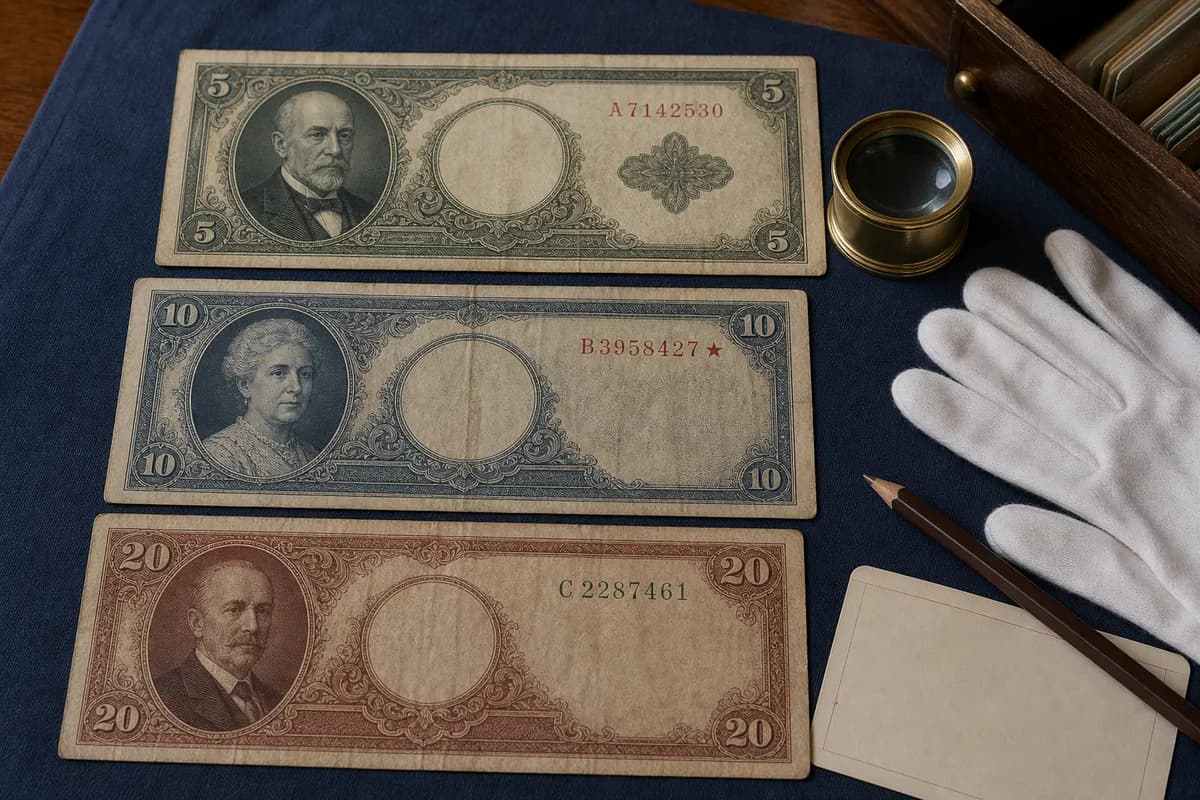
A watermark or thread is useful only when you know what the note is supposed to contain. Start with the issuer, denomination, series or design family, date, signatures, and catalog variety. A revised series can keep the same portrait and color while moving the thread, changing its text, replacing the watermark, or switching from paper to polymer.
Use the full front and back design to establish that identity. The photo-identification guide explains which images and inscriptions help separate similar issues. For unfamiliar scripts, follow the foreign-currency identification workflow before searching for a security feature in isolation.
Then find an issuer or central-bank page for that exact denomination and series. Record the expected watermark subject, its side and position, the thread position, any microtext, and how each feature should look in reflected, transmitted, tilted, or ultraviolet light. If the reference does not mention a feature, do not add it from memory.
Understand what a banknote watermark actually is
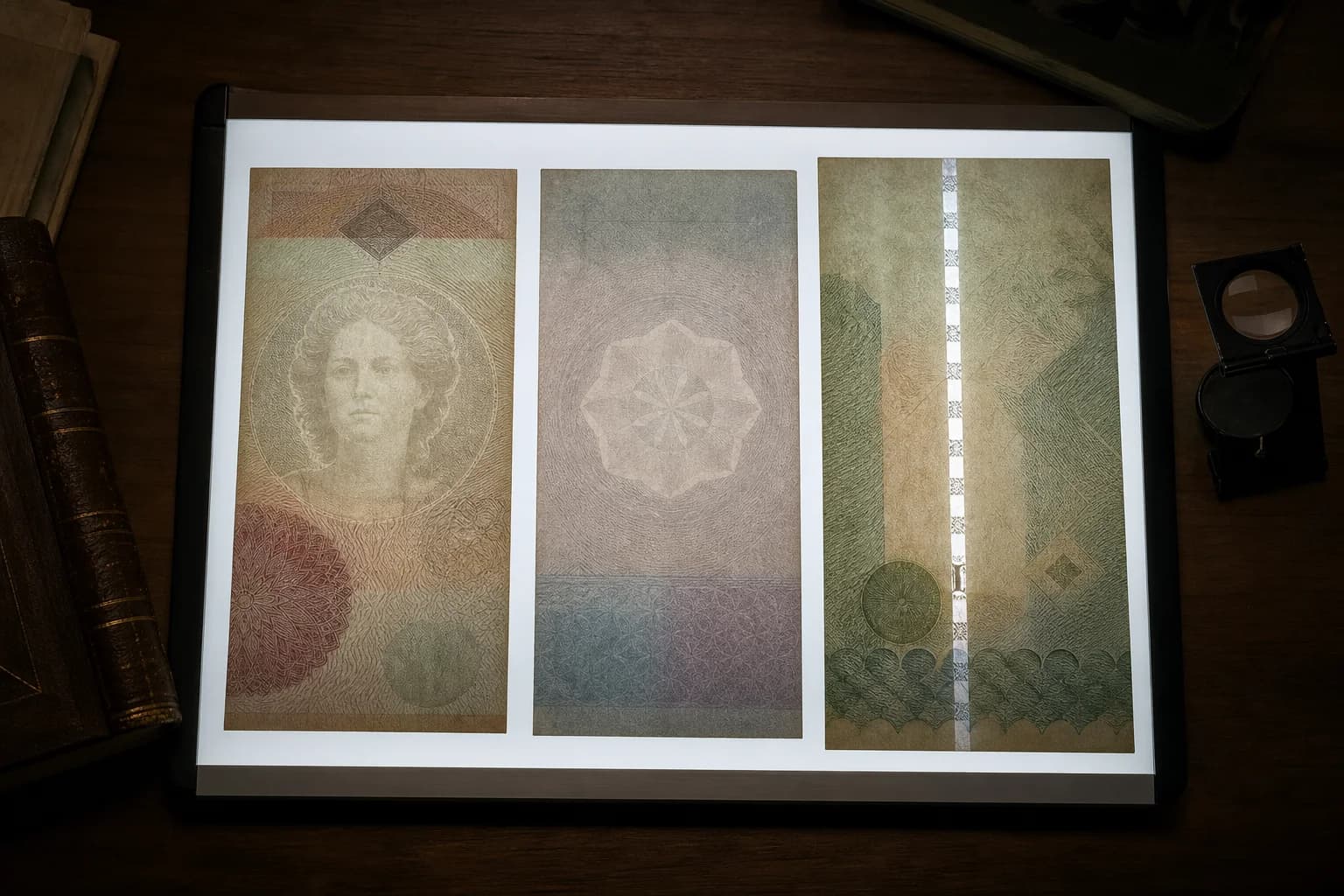
A traditional banknote watermark is part of the paper, not an image printed onto its surface. During papermaking, shaped wire or a mould changes how fibers settle. Areas with different density and thickness transmit different amounts of light, creating pale, dark, and intermediate tones. The European Central Bank describes the euro watermark as a result of varying paper thickness, with smooth transitions between light and dark areas.
A simple line or shape may use two main tones. A multitone watermark can model a portrait, building, animal, emblem, or other detailed subject. An electrotype watermark adds a sharply defined light element, often a denomination or symbol, by producing a localized thin area. One note can combine a shaded subject with a brighter electrotype element.
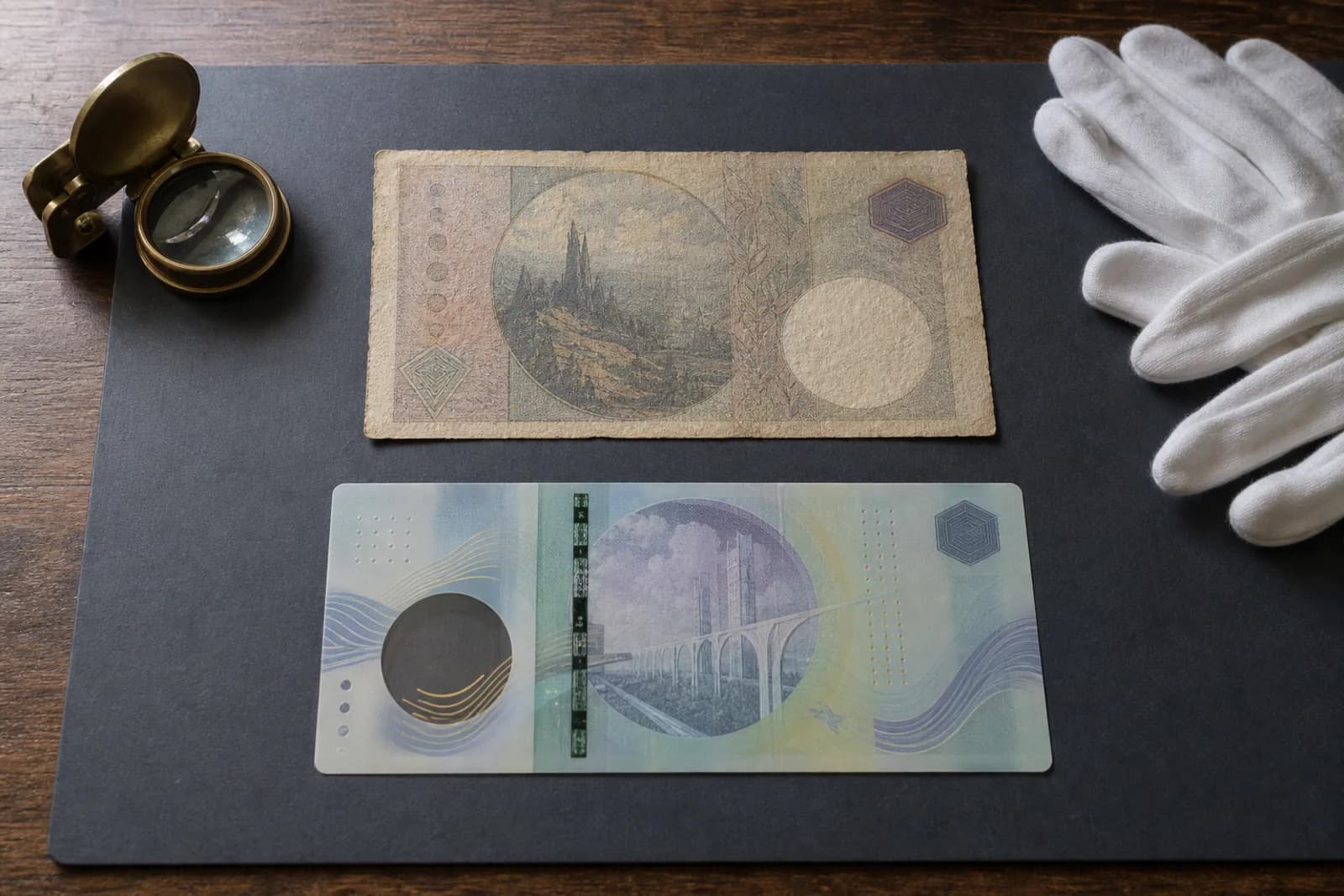
Because the design exists through the sheet, it should appear from both sides when viewed against light. The reverse view is laterally reversed. Printed imitations tend to sit on one surface, keep the same orientation, show hard ink edges, or remain conspicuous without transmitted light. These are useful observations, but they are not a complete authentication test.
Distinguish watermark, electrotype, window, and printed imitation
| Feature | How it is formed | What to inspect | Common mistake |
|---|---|---|---|
| Shaded watermark | Fiber-density and thickness changes in paper | Subject, tone transitions, position, and view from both sides | Treating any pale portrait as the expected design |
| Electrotype watermark | A localized thin area producing a bright, crisp element | Exact symbol, denomination, placement, and orientation | Confusing a surface-printed numeral with a paper feature |
| Transparent polymer window | A clear area designed into a polymer substrate | Window shape, printed or foil elements, clarity, and issue match | Calling every transparent window a watermark |
| Printed simulation | Ink, toner, coating, or alteration on the surface | One-sided appearance, hard edges, surface sheen, and behavior off the light | Accepting a familiar-looking image without comparing the paper structure |
Read an embedded or windowed security thread
A security thread is a narrow strip incorporated into the banknote substrate during manufacture or, on some polymer and hybrid designs, integrated in another way. A fully embedded thread may be almost invisible in reflected light and appear as a continuous dark line against transmitted light. It can carry clear or demetallized microtext, a denomination, a currency code, fluorescence, magnetic properties, or other machine-readable elements.
A windowed thread comes to the surface at planned intervals. In ordinary light it may appear as separate metallic or colored segments. Against transmitted light, the exposed and embedded portions should align into a continuous band. Modern threads may also shift color or show movement when tilted, so one still photograph cannot capture the complete behavior.
Position matters. U.S. Currency Education Program material notes that the security thread is placed differently by denomination, while euro references specify the tiny text and location expected for each design. Record the distance from a stable design element rather than writing only 'thread present.' A real thread from another denomination or a printed stripe does not satisfy the comparison.
Inspect the note with safe, simple equipment
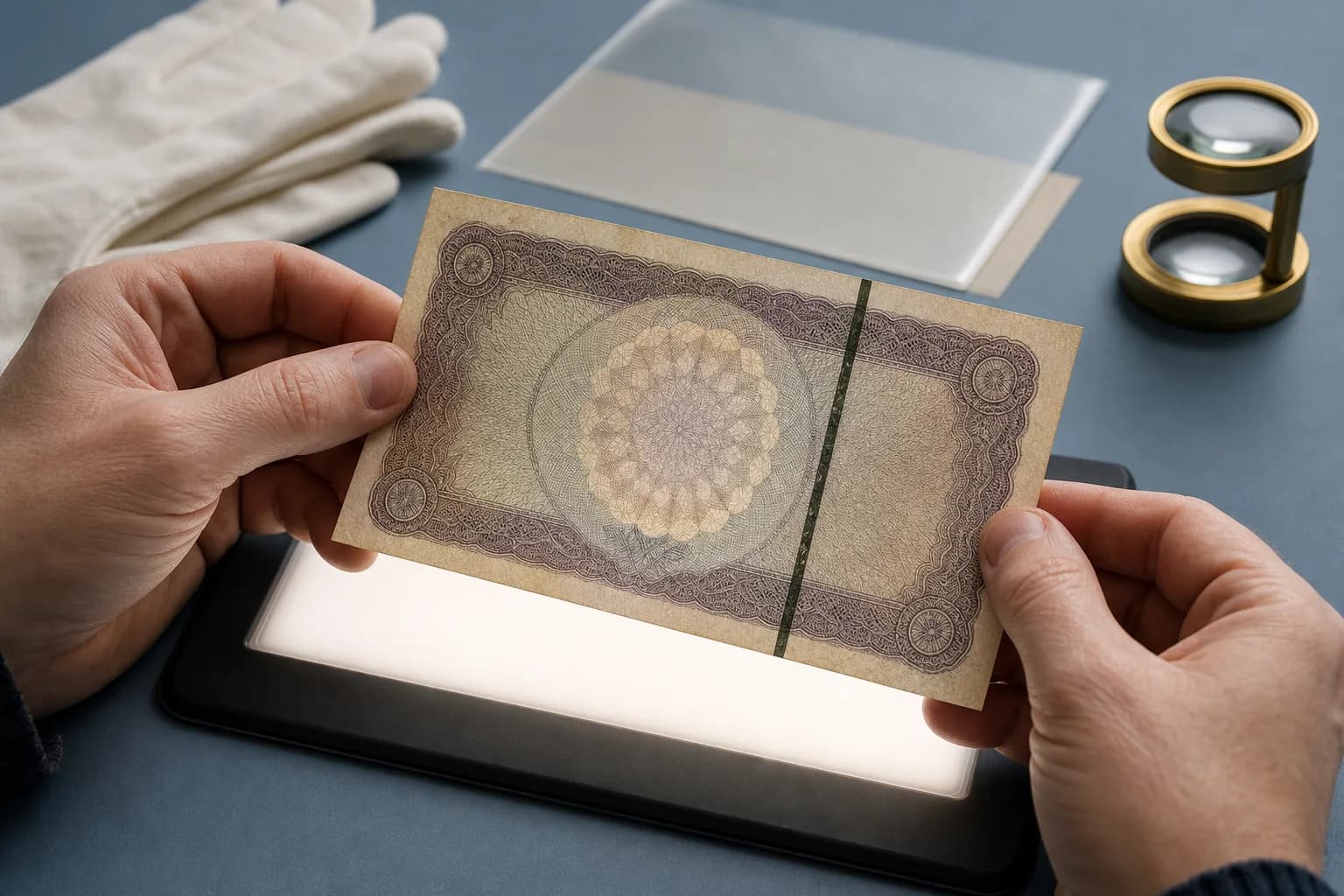
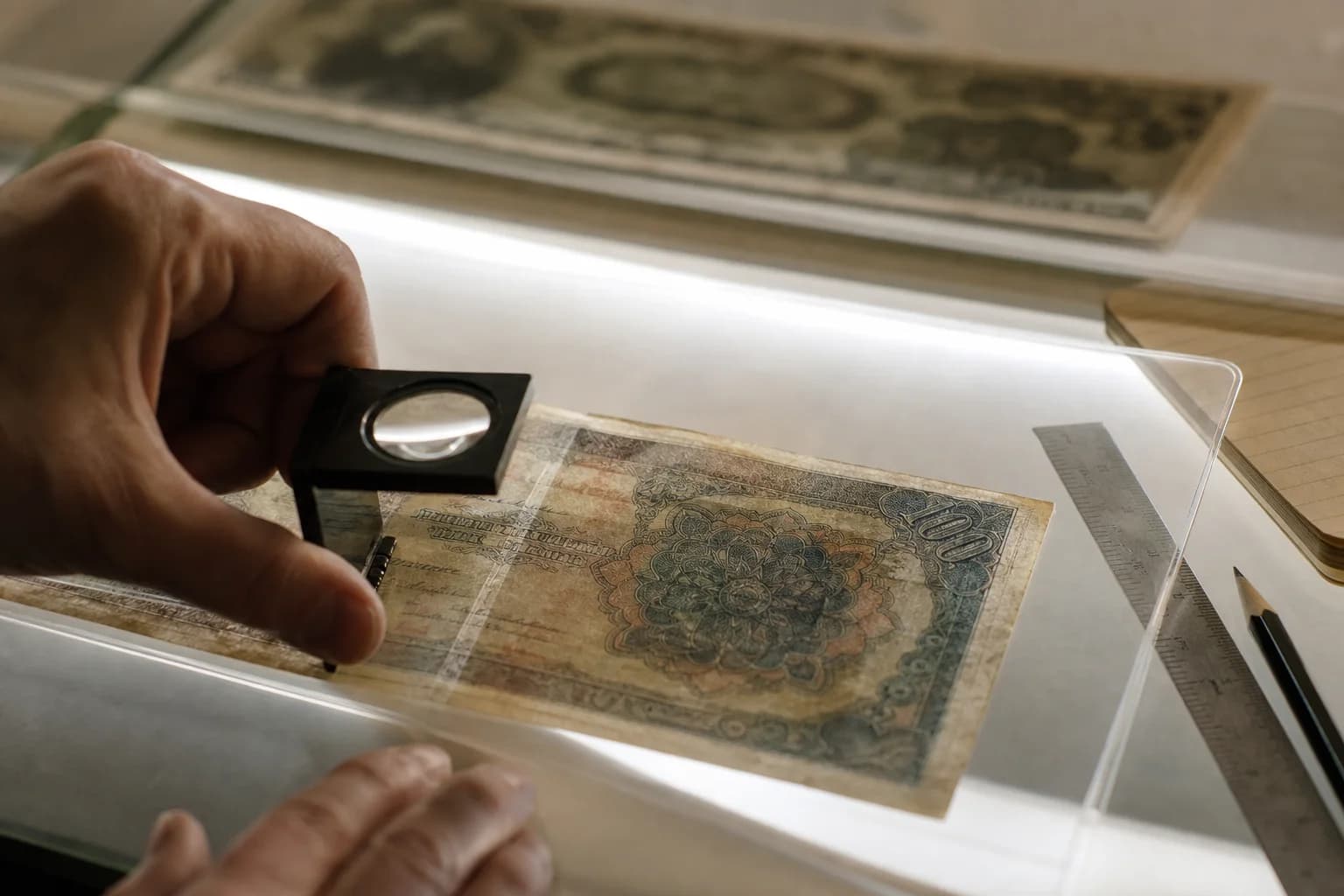
Use a diffuse light panel, a shaded window, or another broad, cool light source. Avoid a bare hot bulb, strong sunlight, and prolonged ultraviolet exposure. Clean, dry hands give better control than loose cotton gloves for most ordinary notes. Support fragile material on a clear inert sheet and do not flatten folds just to improve visibility.
Begin in normal light and photograph both sides. Next, hold or support the note above transmitted light without creasing it. Observe the watermark from the front and back, then trace the thread from edge to edge. Use a 5x to 10x loupe only where the official reference says microtext or a surface transition should exist. Tilt the note under steady reflected light if the thread has a declared optical effect.
UV can provide supporting evidence when the issuer publishes the expected wavelength, color, and location. It should not be the first or only test. Paper, repairs, washing, brighteners, contamination, and the lamp itself can change what you see. Never use liquids, heat, pressure, cutting, or an attempt to lift the thread.
- Identify the exact issuer, denomination, series, and date.
- Read the issuer's feature guide before handling the note.
- Inspect in normal, transmitted, and tilted light as required.
- Compare shape, position, text, continuity, and behavior.
- Document uncertainty instead of forcing a pass or fail result.
Compare the feature, not just its presence
A useful comparison asks several small questions. Is the watermark subject correct? Does it face the expected direction? Are the pale and dark regions in the right places? Is the thread on the correct side of the portrait or central design? Does its text match the currency and denomination? Does a windowed thread become continuous against light? Does the effect appear from both sides where the issuer says it should?
Wear can soften a watermark, obscure microtext, scratch a polymer window, or break the surface of a windowed thread. A fold along an embedded thread can also create a ridge or weakness. Damage lowers confidence, but it does not automatically turn a note into a counterfeit. Describe the obstruction and compare other independent features.
If two catalog varieties differ mainly by watermark or thread, make the distinction explicit in the inventory. This is similar to verifying a replacement-note marker: the feature helps classify an exact issue only when the issuer's system and the rest of the note agree.
Photograph and document transmitted-light evidence
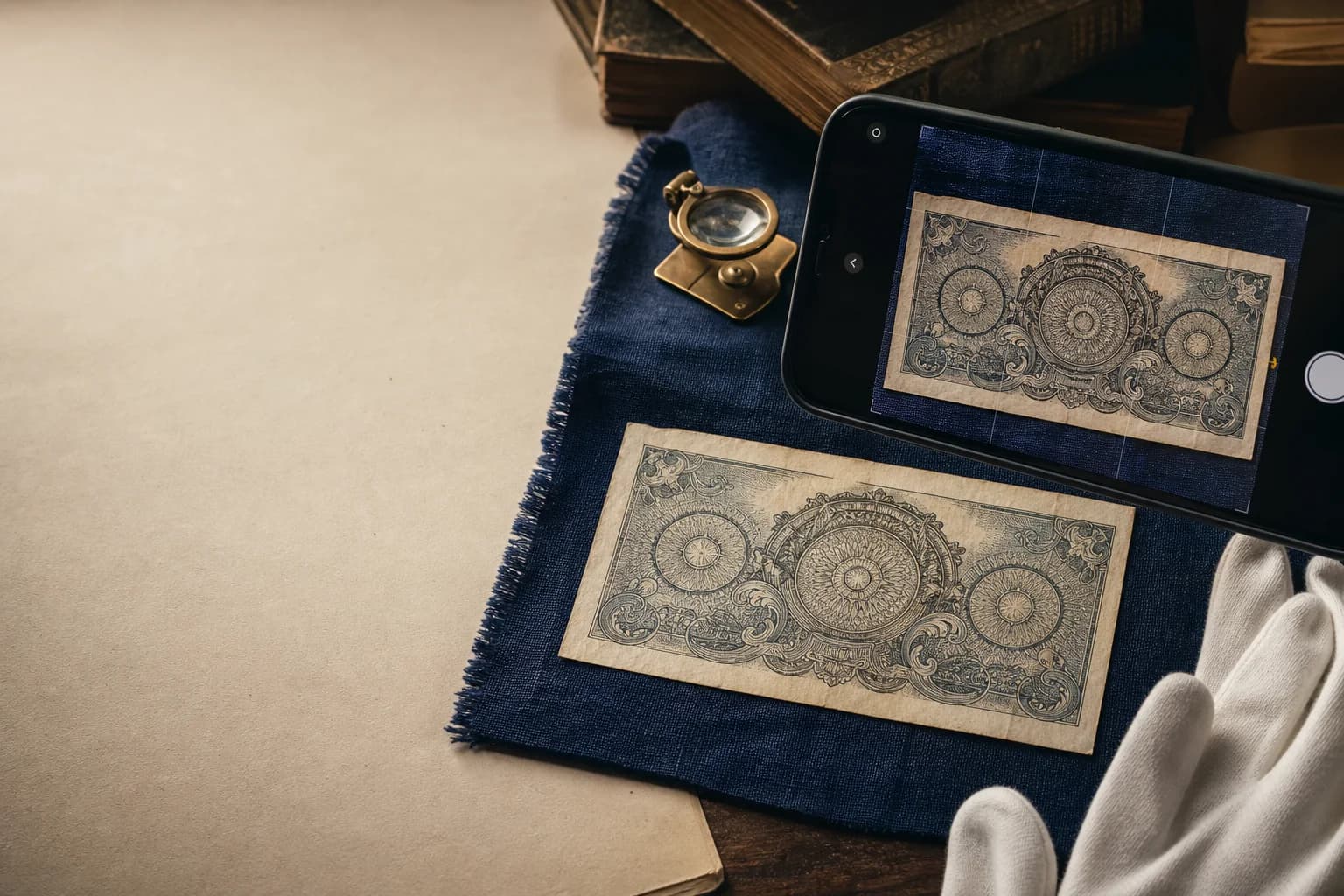
Make a normal front image, a normal back image, and a transmitted-light image at the same orientation. Add one close-up of the watermark and another of the thread only if they remain sharp. Keep the note's edges visible in at least one image so a viewer can understand position and scale.
Expose for the paper rather than the bright panel. Lock focus on the feature area, keep the camera parallel, and block stray light around the note if necessary. Do not use aggressive contrast, sharpening, background removal, or generative fill. Preserve the original file and label edited copies separately.
In the inventory, record the source used for comparison, access date, expected feature, observed feature, lighting method, and confidence. If the note is going back into storage, use the inert enclosure and stable conditions described in the guide to storing paper money safely.
Know why old and polymer notes need different expectations
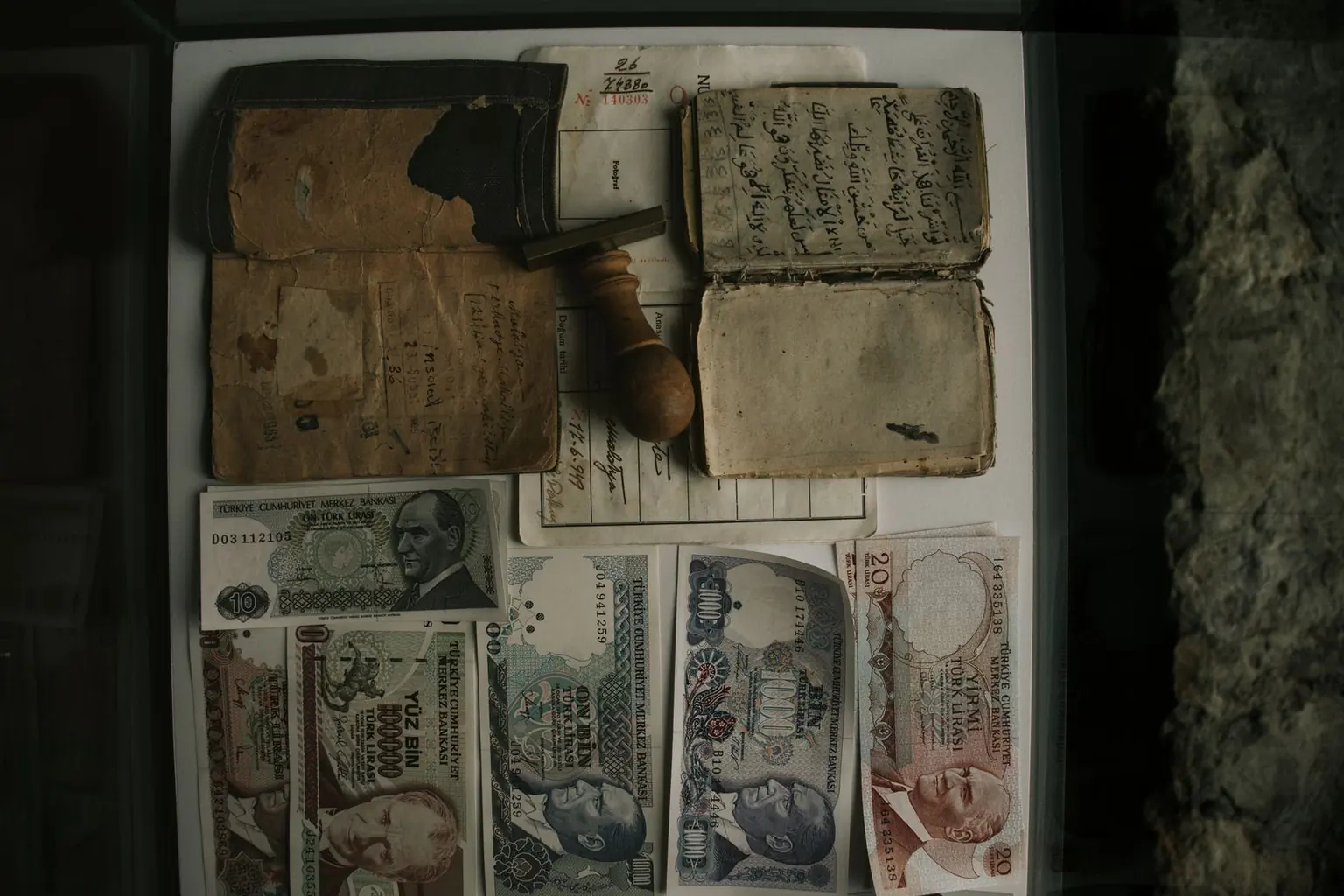
Many older notes predate modern public security-feature programs. Some use a simple watermark, colored fibers, distinctive paper, engraving, signatures, or secret marks. Others were emergency issues, private-bank notes, local currency, remainders, specimens, or low-cost printings with no watermark or thread. Their absence is meaningful only if a catalog or specialist reference says the variety should have them.
Polymer notes do not carry a traditional paper watermark. They often use transparent windows, foils, diffraction effects, tactile print, and other elements suited to film. The Bank of England explains that its polymer notes use a defined portrait in a see-through window, while its earlier paper notes used portrait watermarks. Treat the substrate change as part of the issue identity, not as a missing feature.
Hybrid substrates can combine paper and polymer components, and modern thread technology can appear printed, embedded, windowed, or optically active. When terminology conflicts across references, describe what you can observe and retain the issuer's own term in your notes.
Do not turn a feature check into an authentication claim
Watermarks and threads are public checks within a layered security system. An imitation can reproduce part of the appearance, and a genuine note can be damaged, altered, washed, repaired, or misidentified. The Federal Reserve advises relying on security features rather than a detection pen, but that does not mean one feature settles the question.
For circulating cash, follow the issuing authority's instructions and local procedures for a suspect note. Do not knowingly pass it on. For a collectible note, isolate it from sale inventory, preserve the evidence, and ask a qualified banknote specialist or grading service. Expensive, historically significant, or legally sensitive material deserves an in-person review.
Rarity and value are separate questions. A different watermark or thread can identify a scarce variety, but scarcity still requires population and market evidence. Use the documented method in what makes a banknote rare before treating an unusual feature as a premium.
Use a repeatable collector workflow
Start with identification, not suspicion. Money AI can help organize visible clues from front and back photographs and suggest an issuer, denomination, series, date, or material when the note is unfamiliar. Use that result to find the correct official reference, then inspect the physical note yourself. The app cannot feel paper, see a hidden thread without the right photograph, authenticate the note, or replace professional examination.
Finish with a written conclusion that separates fact from uncertainty. For example: 'The design matches the 2004 series; the expected portrait watermark is visible from both sides; the thread is in the published position, but its microtext is unreadable because of a fold.' That statement is more useful than 'looks real' because another collector can repeat the check.
If the identity remains uncertain, preserve the images and stop. A careful unresolved record protects the note and the next researcher. The aim is not to force every banknote through the same checklist, but to compare the right feature on the right issue with evidence another person can verify.
- Name the issue.
- Find the issuer's feature guide.
- Inspect without altering the note.
- Record both confirming and conflicting observations.
- Escalate important uncertainty to a qualified specialist.
Frequently asked questions
Does every banknote have a watermark and security thread?
No. Features depend on the issuer, series, denomination, date, and substrate. Some genuine paper notes lack one or both, while polymer notes commonly use transparent windows and other devices instead of a traditional watermark. Check a reference for the exact issue before treating an absent feature as suspicious.
Should a banknote watermark be visible from both sides?
A traditional watermark formed within paper should be visible from both sides in transmitted light, with the orientation reversed from the back. Its light and dark transitions should belong to the paper rather than look like surface ink. The expected image and position still need to match the specific issue.
What is a windowed security thread?
A windowed thread alternates between sections exposed at the surface and sections embedded in the paper. It may look broken or segmented in ordinary reflected light, then form a continuous line when the note is held against transmitted light. Some windowed threads also carry microtext, color shifts, or motion effects.
Can a watermark or thread prove that a banknote is genuine?
No single feature proves authenticity. Counterfeits can imitate visible effects, damaged notes can hide genuine ones, and different series can use different designs. Compare several expected features with an official reference and seek a bank, grading service, or qualified banknote specialist when the decision matters.
Can a phone photo show a banknote watermark clearly?
Yes, if the note is photographed against even transmitted light with the camera exposed for the note rather than the lamp. A photo can document shape and placement, but it cannot establish paper structure, tactile printing, fluorescence, or authenticity. Keep an ordinary front and back photo as well.
Sources and further reading
Explore the primary references used to prepare this collector guide.