Quick answer
Paper banknotes are usually printed on cotton-fiber security paper, while polymer banknotes use a coated plastic film and often include a clear window. Identify the exact issue before judging the material: feel, transmitted light, edge structure, windows, watermarks, and published issuer specifications work together. Neither substrate proves authenticity, rarity, condition, or value.
Identify the issue before deciding what it is made from
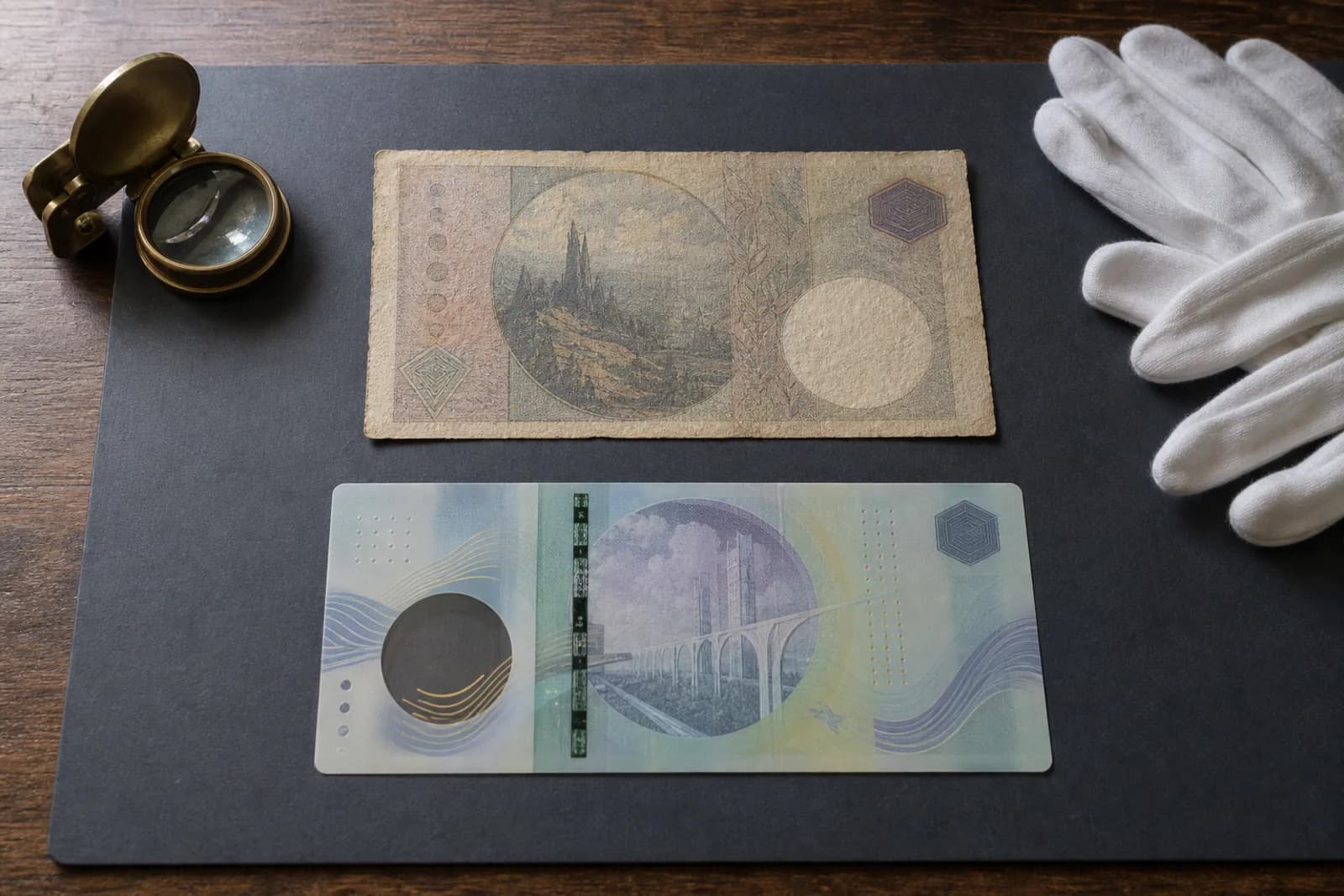
Start with country or issuing authority, denomination, series, date, signatures, dimensions, and design. Then check the issuer's banknote page or a dependable catalog for the stated substrate. The same denomination can exist in paper and polymer versions with closely related artwork, as collectors regularly discover with Singapore, Thailand, Canada, and other transition series.
Use complete front and back photographs from the banknote photo guide. A clear window is strong evidence of polymer, but not every transparent or shiny feature means that the whole note is plastic. Paper notes can carry polymer patches, transparent windows, foil, or laminated security elements. Hybrid substrates deliberately combine layers.
Do not bend, wet, scratch, tear, burn, or iron a note to test it. These experiments destroy condition and still may not produce a reliable answer. Visual comparison, safe transmitted light, magnification, dimensions, and an issuer specification are enough for a collector record.
| Clue | Cotton-paper note | Polymer note | Hybrid note |
|---|---|---|---|
| Base material | Woven cotton or other security fibers | Coated polymer film, commonly polypropylene | Paper and polymer layers or a paper note with a polymer feature |
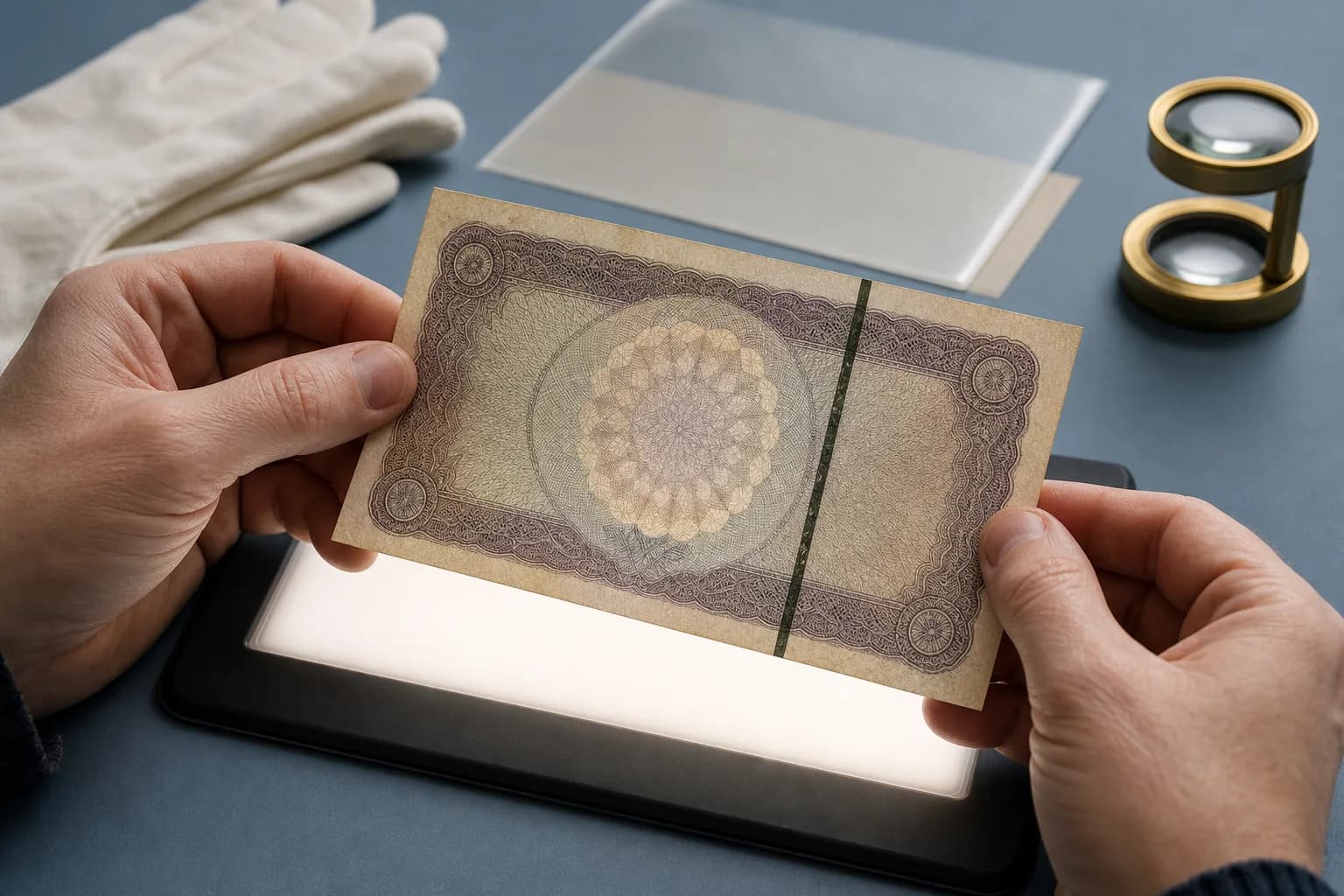
| Transmitted light | Watermark, thread, and fiber structure | Clear or complex transparent window; opaque printed coating | Window or translucent core plus paper-like areas |
| Surface and edge | Matte, fibrous, often with visible fiber breaks | Smooth, non-porous, clean-cut edge | Paper feel may remain while the inner structure differs |
| Typical wear | Soft folds, soiling, tears, thinning, stains | Sharp creases, scuffs, ink loss, window scratches, edge nicks | Damage depends on which layer or feature is affected |
| Best confirmation | Issuing authority or catalog specification | Issuing authority or catalog specification | Named substrate and issuer documentation |
Understand what collectors mean by paper banknotes
Modern banknote paper is not ordinary wood-pulp writing paper. Issuers commonly use durable cotton-based security paper, sometimes blended with other fibers. The sheet can receive sizing, coatings, embedded security fibers, a watermark, a security thread, and intaglio printing. These layers explain why a genuine paper note feels and behaves differently from an office printout.
Look at an undamaged edge under low magnification. Cotton fibers create a compact but irregular structure rather than a transparent film. Under transmitted light, a true watermark belongs within the paper and changes tone gradually. The watermark and security-thread guide explains how to inspect these elements without calling the result an authentication test.
Age changes the evidence. Heavy circulation can soften paper, polish raised printing, open fibers at a fold, or load the surface with dirt. Washing, pressing, repairs, tape, and chemical treatment can further alter feel and color. If a note feels unusually smooth, first consider wear or a coating before deciding that it is polymer.
Recognize a polymer banknote without a destructive test
Polymer banknotes are printed on a flexible plastic substrate, most often a specialized polypropylene film that is opacified and coated so it will accept printing. A clear window can be created by leaving part of the transparent base unobscured. Issuers then add printed, diffractive, foil, tactile, ultraviolet, and other security features around or within that window.
Tilt the note in soft light and compare the opaque printed areas with the transparent feature. The surface usually feels smoother and less absorbent than cotton paper. Edges lack loose paper fibers, although a damaged polymer edge can develop a nick. Once a tear starts at that nick, it may travel readily, which is why strength should not be mistaken for indestructibility.
Use the issuer's published design as the reference. A counterfeit can imitate a window or smooth feel, while a genuine note can be badly worn. Substrate is one identification field, not an authentication verdict. If the issue is valuable or doubtful, seek an appropriate specialist.
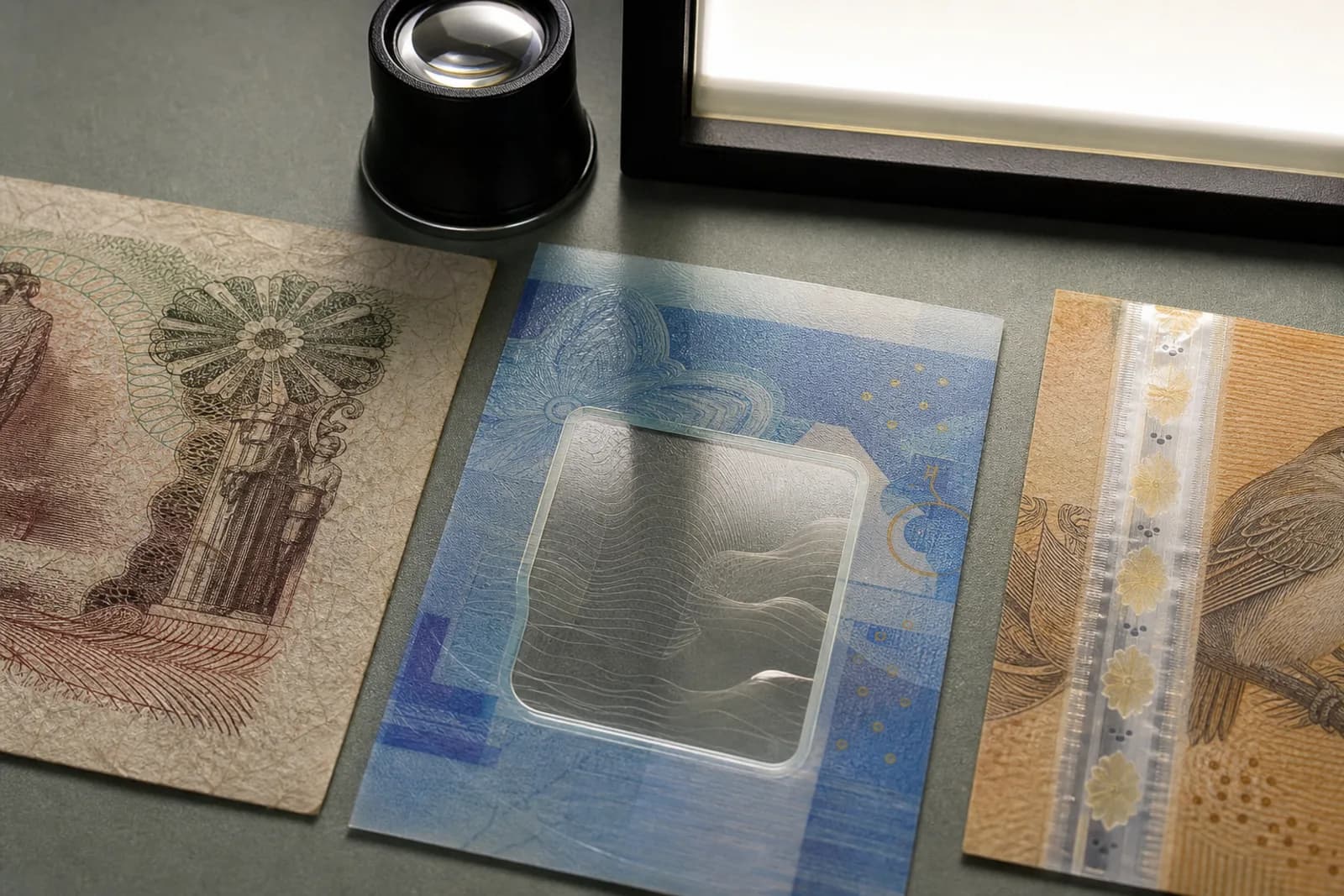
Account for hybrid and composite banknote substrates
The choice is not always paper or polymer. A hybrid note may sandwich a polymer core between paper layers, reinforce paper with a polymer mesh, or add a clear polymer window to a largely paper substrate. These designs can preserve a familiar paper feel while supporting different security or durability goals.
Do not label every note with a clear area as fully polymer. Record the commercial or technical substrate name only when an issuer, printer, or reliable catalog provides it. Otherwise use a cautious description such as paper with transparent window or probable composite substrate. Marketing names do not always reveal the complete construction.
Hybrid notes also complicate storage and condition checks. A fold may break paper fibers while stressing a plastic core; a window can scratch while the surrounding paper remains crisp. Inspect each material boundary and record the actual defect rather than assuming one care rule covers the whole object.
Compare durability without repeating universal claims
Central banks commonly report longer circulation life for their polymer series, but the ratio is specific to denomination, climate, handling, cash processing, design, and the paper series used for comparison. The Bank of England expected its polymer £5 to last about two and a half times as long as its paper predecessor. The Reserve Bank of New Zealand reports an average near four times for its notes. Those figures describe their programs, not every polymer note ever issued.
The Reserve Bank of Australia's cost-benefit analysis shows why context matters. Polymer can cost more per note to produce, while longer service life reduces repeated printing, transport, processing, and destruction. The greatest benefit appeared in frequently handled lower denominations. High denominations held mainly as stores of value produced a different calculation.
Environmental claims require the same restraint. Material production, printing, circulation life, transport, destruction, and recycling all affect a life-cycle result. Cite the issuer's assessment for a named series instead of declaring that one substrate is always greener.
Learn the damage patterns that matter to collectors
Paper usually records circulation through rounded folds, fiber breaks, softening, grime, stains, pinholes, edge splits, thinning, and missing pieces. Original embossing and paper body can be lost through wear or pressing. A small repair may matter more than general handling, so examine both reflected and transmitted light.
Polymer can remain colorful while accumulating defects that photographs hide. Look for sharp creases, pressure dents, hazing or scratches in the clear window, scuffed ink, loss of applied foil, delamination, heat distortion, and small edge nicks. A note that looks bright at first glance is not automatically uncirculated.
The banknote grading guide supplies the shared condition vocabulary, but grading must describe what this substrate actually shows. Photograph polymer at a second lighting angle to reveal window and surface marks. Photograph paper with raking and transmitted light to show folds, thinning, and repairs.
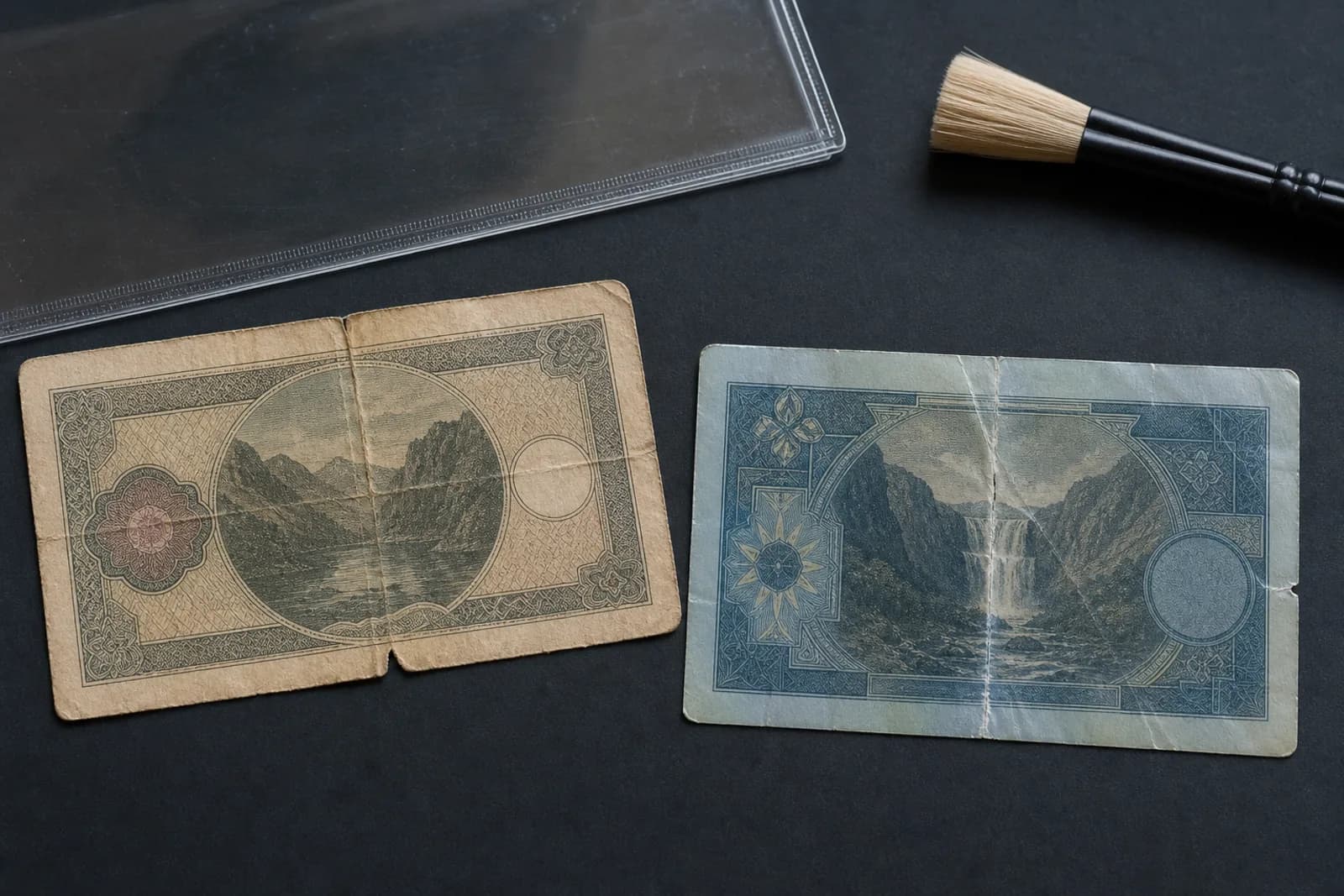
Store both substrates flat, cool, and individually
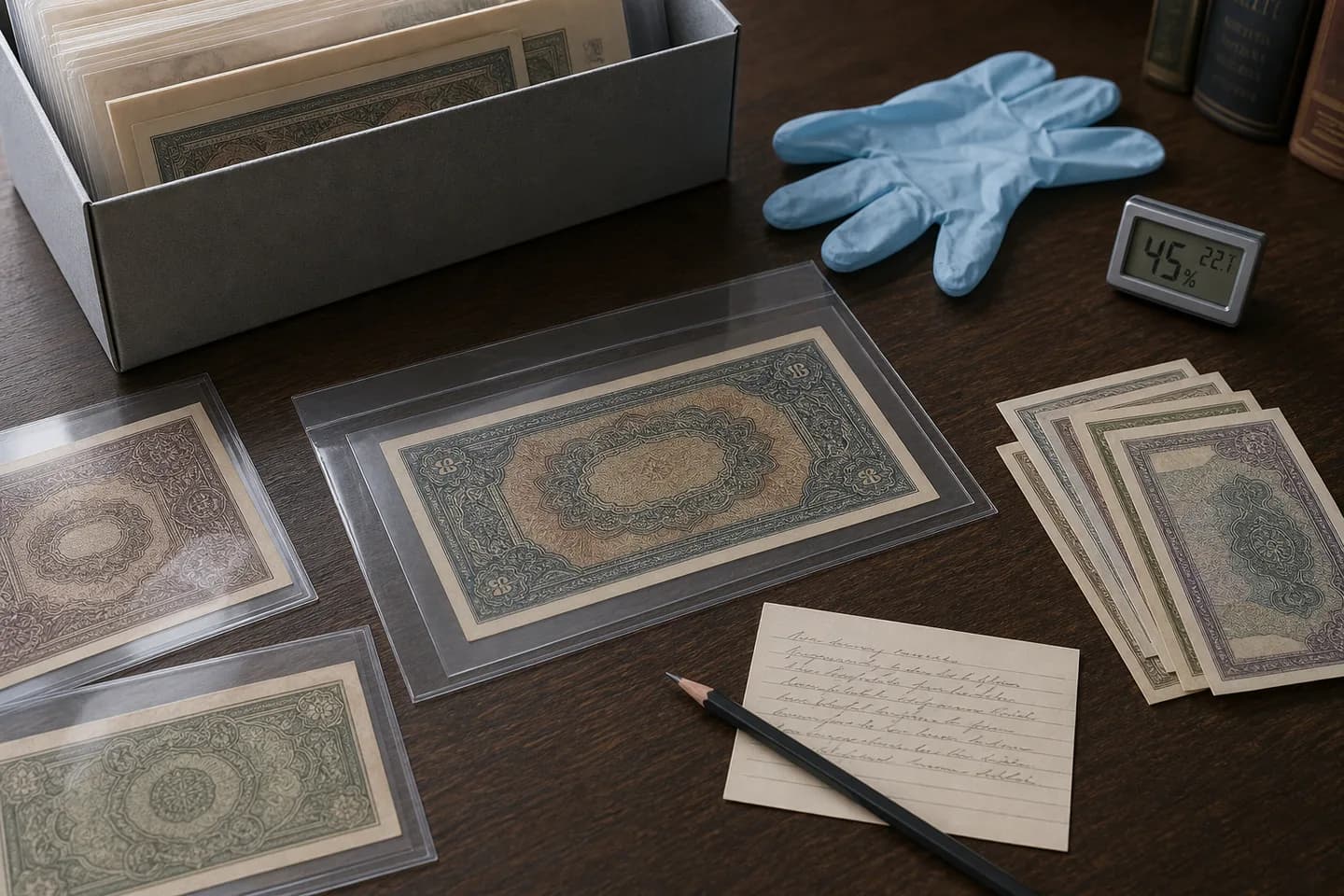
Use a correctly sized, inert holder whose material is stated by the manufacturer. Polyester, polyethylene, and polypropylene products made for archival storage can be suitable when additives, adhesives, and construction are appropriate. A soft sleeve marked only crystal clear or premium plastic does not provide enough information.
Follow the paper-money storage guide: keep each note flat, supported, dark, and away from unstable humidity, pollutants, water, pests, and repeated handling. Avoid soft PVC, pressure-sensitive tape, rubber bands, paper clips, staples, and lamination. Do not crowd polymer notes into tight pockets that rub windows or printed coatings.
Heat deserves special attention with polymer and hybrid notes. Never iron, warm, or leave them against a hot surface. Paper also suffers from heat, dryness, and light, but polymer can distort or shrink. Store mixed collections for the most sensitive object rather than assuming a modern substrate needs less care.
Separate substrate, security, condition, and value
Four questions often get collapsed into one. What is the note made from? Does its visible design match the official issue? What condition and problems does this particular piece have? What does the current collector market pay for comparable examples? Each requires different evidence.
A polymer window can help identify an issue, but it does not authenticate the rest of the note. Durable material does not guarantee a high grade. Being a country's first polymer issue may interest collectors, but it does not by itself establish scarcity or a premium. Apply the banknote rarity framework before making a value claim.
Money AI can help organize front and back photographs, visible material clues, issuer, denomination, and series for follow-up research. It cannot confirm a substrate through touch, authenticate the note, assign a professional grade, or guarantee value. Preserve the original photos and cite the issuer specification in your inventory.
Build a substrate record another collector can verify
Record country, issuer, denomination, series, date, catalog number, dimensions, substrate description, security features, condition defects, source URL, access date, and photograph filenames. If the issuer uses a named substrate, include that name without replacing the plain-language description.
Add a confidence field. Confirmed means an issuer or authoritative catalog matches the exact issue. Probable means the physical clues fit but a decisive source or detail is missing. Unresolved is appropriate when a transparent feature, coating, or damaged surface could support more than one construction.
This record prevents future mistakes when paper and polymer versions share artwork. It also lets you correct an attribution without losing the old research. The useful conclusion is not simply plastic or paper; it is an exact issue linked to an observable material description and a dated source.
- Photograph the full front and back in neutral light.
- Add transmitted-light and raking-light views when safe.
- Measure the note without forcing curled or fragile material flat.
- Copy the issuer's substrate wording and source URL.
- Describe window, watermark, thread, surface, and edge separately.
- Record defects without trying to clean, flatten, or repair them.
Use a seven-step paper-versus-polymer checklist
First identify the exact issuing authority and series. Second compare the front, back, dimensions, and date with an official reference. Third inspect the edge and surface under ordinary magnification. Fourth use transmitted light to distinguish watermark, clear window, and hybrid structure. Fifth inspect folds, coatings, windows, and edge damage without flexing the note.
Sixth record the substrate exactly as the issuer or catalog describes it. Seventh keep substrate separate from authenticity, grade, rarity, and value conclusions. Stop when the exact issue or material remains uncertain. A specialist opinion is safer than a physical test.
For most collections, this takes only a few minutes and produces a durable result. The method works because it combines identity, physical evidence, and a direct source while protecting the note from the most damaging form of research: experimentation on the object itself.
Frequently asked questions
How can I tell if a banknote is paper or polymer?
First identify the issue and check the issuing authority's specification. Polymer usually feels smooth and non-fibrous and may have a clear window; cotton paper shows a fibrous edge and often carries a watermark within the sheet. Hybrid notes can combine paper surfaces with a polymer core or window, so one clue is not enough.
Are polymer banknotes waterproof?
Polymer notes resist water and do not absorb moisture like cotton paper, but waterproof is too broad. Printing, coatings, foils, transparent windows, and damaged edges can still be scratched, stained, distorted, or separated. Never wash a collectible note to test its substrate.
Are polymer banknotes worth more than paper banknotes?
Not simply because they are polymer. Collector value depends on the exact issue, scarcity, demand, condition, serial or replacement status, errors, provenance, and comparable sales. A common circulating polymer note may remain at face value, while a scarce paper or polymer variety may earn a premium.
Do paper and polymer banknotes use the same grading scale?
Services use the same broad numerical framework, but the visible defects differ. Paper shows folds, fiber breaks, stains, thinning, and repairs. Polymer may show window scratches, ink wear, pressure marks, sharp creases, distortion, or edge nicks. Compare the whole note and disclose substrate-specific problems.
Should polymer banknotes use special sleeves?
Use an inert, well-fitted holder made from a clearly identified archival material, just as you would for paper notes. Keep the note flat, cool, dark, and free from pressure. Avoid soft PVC, adhesives, lamination, tight pockets, rubber bands, and heat.
Sources and further reading
Explore the primary references used to prepare this collector guide.